

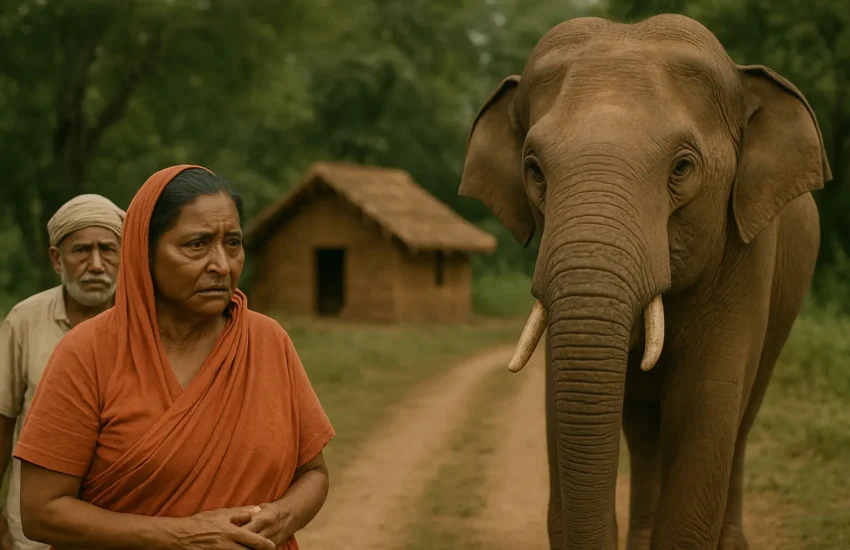
Understanding the Human-Elephant Conflict in Chhattisgarh
A Growing Challenge for Coexistence
The human-elephant conflict in Chhattisgarh has emerged as one of India’s most significant wildlife challenges. Expanding human settlements and shrinking forest cover have disrupted the age-old coexistence between local communities and elephants. As forest resources diminish, elephants are straying from their traditional habitats, leading to unfortunate encounters that often result in loss for both sides.
Why the Conflict Happens
- Habitat Loss and Forest Degradation
Once rich in dense forests and abundant food sources, Chhattisgarh has experienced alarming deforestation due to urbanization, mining, and agricultural expansion. The steady degradation of forest ecosystems has made survival increasingly difficult for elephant herds.
- Disrupted Elephant Corridors
Elephants naturally migrate across large distances using corridors they have utilized for centuries. In Chhattisgarh, these corridors are becoming fragmented by highways, rail networks, and human settlements, forcing elephants to enter farmlands in search of food.
- Human Encroachment and Crop Raiding
As forests shrink, elephants venture into villages and agricultural lands, leading to crop destruction and property loss. These incidents often result in hostility towards elephants, further straining the fragile balance between humans and wildlife.
- Impact of Habitat Loss in Central India
The loss of elephant habitat in central India extends beyond the species itself. The degradation of migration routes affects numerous other animals sharing these ecosystems. The increase in human and elephant casualties highlights the ecological imbalance caused by disrupted wildlife pathways.
Elephants serve as ecosystem engineers—their movements help regenerate forests through natural seed dispersal. Thus, the decline in elephant populations negatively impacts the entire ecological chain, threatening biodiversity in the region.
Conservation Efforts and Sustainable Solutions
- Restoring Elephant Corridors
Collaborative initiatives between wildlife agencies and government bodies are focusing on identifying and reviving elephant corridors in Chhattisgarh. Through reforestation and the establishment of buffer zones, these programs aim to reconnect fragmented habitats.
- Community Participation
Local community involvement is central to long-term conservation. Compensation schemes for crop damage, combined with awareness campaigns, help foster tolerance and empathy towards elephants.
- Technological Monitoring
Modern solutions, such as GPS tracking, drones, and early warning systems, are proving effective in monitoring elephant movements. These tools enable timely alerts to nearby villages, reducing risks and preventing accidents.
- The Role of Education and Awareness
Sustained conservation efforts hinge on education. By raising awareness about elephant behavior and their roles within ecosystems, organisations like Gaj-Dastak promote understanding and compassion. Educational initiatives and documentaries play a crucial role in shifting public perception, helping communities view elephants not as adversaries but as vital cohabitants.
A Vision for the Future
Resolving the human-elephant conflict in Chhattisgarh requires a compassionate and comprehensive approach. Beyond government intervention, the participation of local communities, NGOs, and citizens is essential for achieving long-term balance. Through the restoration of forest corridors, sustainable land-use planning, and ongoing awareness efforts, central India can once again nurture harmony between people and elephants.
