

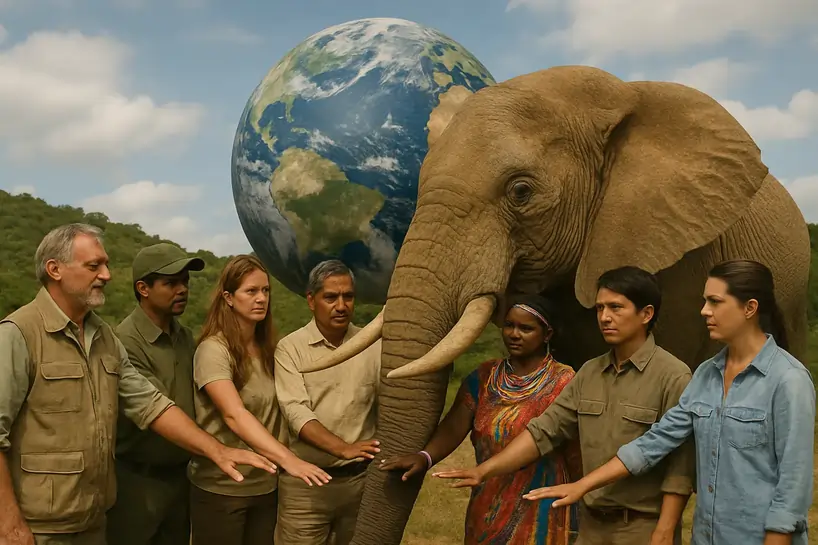
Global Elephant Conservation: Uniting Efforts to Save
A Call to Save Earth’s Gentle Giants
Across the savannas of Africa and the forests of Asia, elephants stand as symbols of wisdom, strength, and the delicate balance of nature. Yet today, these majestic giants face mounting threats — poaching, habitat loss, and human-wildlife conflict. Global elephant conservation has become an urgent, united mission — one that binds governments, scientists, and communities in a shared effort to protect these endangered species before they vanish forever.
This isn’t just about saving elephants; it’s about preserving biodiversity, maintaining healthy ecosystems, and protecting the cultural heritage tied to these intelligent creatures.
Understanding the Crisis: Why Elephants Are Endangered
Elephants are classified as an endangered species under the IUCN Red List. Over the last century, their populations have declined dramatically:
-
African elephants have decreased by nearly 60% in the past 50 years.
-
Asian elephants, smaller and more forest-dwelling, have lost over 80% of their natural habitat.
The causes are complex yet clear — illegal ivory trade, deforestation, climate change, and human encroachment have fractured the natural landscapes elephants once roamed freely.
Each lost elephant represents a broken ecological link — they are keystone species, shaping forests and savannas through seed dispersal and habitat modification, ensuring biodiversity thrives.
Global Elephant Conservation: A Shared Responsibility
The term global elephant conservation signifies the unification of cross-border efforts. Governments, NGOs, and indigenous communities are working collaboratively through frameworks such as:
-
The Convention on International Trade in Endangered Species (CITES) – regulating ivory trade.
-
The African Elephant Coalition – advocating for stronger anti-poaching laws.
-
The Asian Elephant Range States Meeting – focusing on long-term habitat preservation and coexistence strategies.
These partnerships exemplify the growing realization that elephants don’t recognize political boundaries — saving them requires global unity.
Key Pillars of Global Conservation Efforts
1. Wildlife Preservation and Legal Protection
Global conservation begins with wildlife preservation laws and stricter enforcement.
-
Countries like Kenya and Botswana have set up dedicated wildlife protection units equipped with surveillance drones and GPS tracking.
-
India’s Project Elephant focuses on habitat management and minimizing human-elephant conflict zones.
-
Advanced monitoring systems powered by AI and acoustic sensors (like those used in Chhattisgarh, India) are detecting elephant movements early to prevent conflicts.
These measures strengthen endangered species protection, ensuring elephants are safeguarded both in the wild and captivity.
2. Anti-Poaching Initiatives: Combating the Ivory Crisis
The illegal ivory trade remains one of the greatest threats to elephants. Every year, tens of thousands are slaughtered for their tusks.
Global organizations such as Wildlife Conservation Society (WCS), World Wildlife Fund (WWF), and Save the Elephants have launched powerful anti-poaching initiatives, including:
-
Training and arming ranger patrols in Africa and Asia.
-
Deploying sniffer dogs and drones to detect poachers.
-
Strengthening community-based surveillance through local involvement.
The recent technological advances — from satellite tracking to DNA forensics — have revolutionized how authorities identify poaching networks and prosecute offenders.
3. Habitat Restoration and Connectivity
Without suitable habitats, conservation cannot succeed. Habitat restoration projects are working to reconnect fragmented elephant corridors and revive forest landscapes.
-
In India, Elephant Corridors Restoration Programs reconnect migratory routes.
-
In Africa, initiatives like Great Elephant Census help monitor herds and direct restoration funding.
-
Southeast Asia is experimenting with reforestation through local farmers, creating sustainable coexistence models.
These actions contribute to biodiversity conservation, ensuring that not only elephants but countless other species dependent on these ecosystems can flourish.
4. Community Empowerment and Human-Elephant Coexistence
No conservation effort can succeed without local communities. In regions where elephants frequently raid crops or destroy property, fear and frustration can lead to retaliation.
Community-based programs teach coexistence through:
-
Eco-tourism ventures that provide alternative income.
-
Compensation schemes for crop losses.
-
Education programs highlighting the ecological role of elephants.
By making local people stakeholders in wildlife preservation, conservation transforms from enforcement to empowerment.
Biodiversity Conservation: The Ripple Effect
When we protect elephants, we protect entire ecosystems. These giants:
-
Disperse seeds across vast distances.
-
Create waterholes used by other species.
-
Open pathways in dense forests that allow sunlight to reach smaller plants.
Their survival directly influences forest regeneration and carbon sequestration, both vital for fighting climate change. Thus, biodiversity conservation and elephant protection are deeply interlinked.
Success Stories: Signs of Hope
Despite the grim statistics, there are victories worth celebrating:
-
Botswana’s elephant population has grown to over 130,000 due to strict anti-poaching policies.
-
Thailand’s Elephant Conservation Center has become a model for ethical elephant tourism.
-
India’s acoustic deterrent system in Chhattisgarh has successfully reduced human-elephant conflicts.
Each of these examples reinforces that coordinated, science-backed conservation can turn the tide.
The Road Ahead: What the World Must Do
To ensure long-term success, global elephant conservation must prioritize:
-
Cross-border cooperation and real-time data sharing.
-
Sustainable funding for anti-poaching and research programs.
-
Climate resilience strategies to safeguard habitats from degradation.
-
Public awareness campaigns promoting ethical tourism and zero tolerance for ivory products.
Every citizen has a role — whether through advocacy, supporting conservation NGOs, or choosing sustainable tourism.
Conclusion: Uniting for a Future with Elephants
Elephants are more than wildlife — they are living connections between nature, culture, and humanity’s shared history. The mission of global elephant conservation is not just to prevent extinction; it’s to rebuild harmony between humans and the natural world.
Saving elephants means saving ourselves — our forests, our water, our planet. The call is global, and the time is now.
