

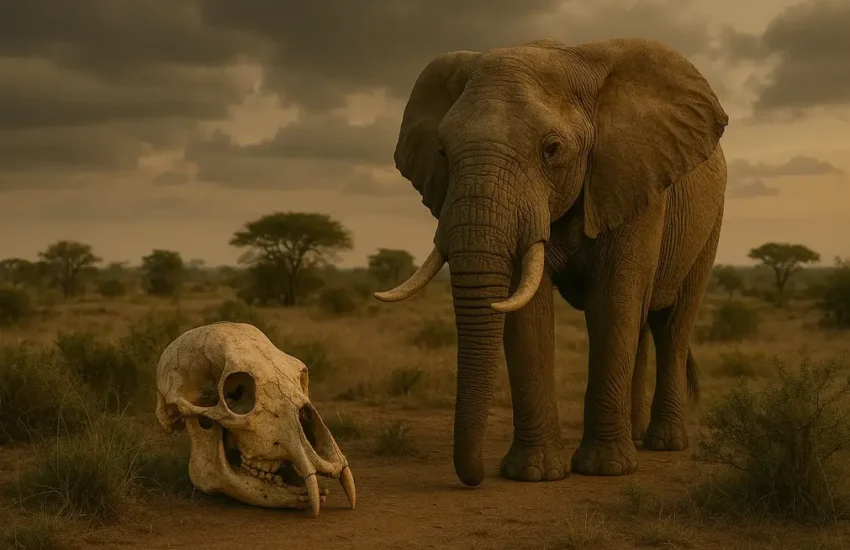
Elephant Extinction Threats: How Close Are We
The Gentle Giants on the Brink
Across the savannas of Africa and the lush forests of Asia, elephants—our planet’s largest land mammals—once roamed freely in millions. Today, their thunderous herds are quieting. The elephant extinction threats we face now are not distant possibilities—they are present-day realities.
From elephant poaching for ivory to habitat loss and fragmentation caused by expanding human settlements, and escalating human-elephant conflict, these forces are driving elephants toward a dangerous tipping point. If humanity does not act decisively, future generations might only know elephants from textbooks and screens.
1. Understanding Elephant Extinction Threats
Elephants play a vital ecological role as “ecosystem engineers.” They disperse seeds, create water holes, and shape landscapes that sustain countless other species. Losing them would set off a domino effect across ecosystems.
But multiple man-made pressures are pushing elephants to the edge:
-
Rampant poaching for ivory
-
Expanding illegal wildlife trade networks
-
Deforestation and habitat encroachment
-
Increasing clashes between elephants and humans
Each of these forces interacts and amplifies the others—creating a complex extinction web that’s tightening around these magnificent animals.
2. Elephant Poaching: The Silent Slaughter
At the heart of the elephant extinction crisis lies elephant poaching. Despite decades of international bans, poachers still kill thousands of elephants each year for their tusks.
The Demand for Ivory
Ivory, once a symbol of luxury and power, remains in high demand for ornaments, carvings, and religious artifacts. The illegal ivory trade is a multi-billion-dollar industry, with networks spanning continents—from African poaching grounds to Asian black markets.
The Human Cost
Poaching isn’t just an animal issue—it fuels organized crime, funds terrorism in some regions, and destabilizes local communities. Rangers risking their lives to protect elephants face heavily armed poachers daily.
Conservation Success Stories
Nations like Kenya and Botswana have shown that strong enforcement and community involvement can curb poaching. Kenya’s dramatic ivory-burning ceremonies sent a powerful message to the world—ivory belongs to elephants, not humans.
3. The Dark World of Illegal Ivory Trade
Even with the 1989 CITES (Convention on International Trade in Endangered Species) ban, the illegal ivory trade thrives underground. Sophisticated trafficking routes smuggle tusks across borders, often disguised as legal goods.
Digital Age Challenges
Online marketplaces and encrypted messaging apps have made ivory sales harder to track. Despite ongoing efforts by INTERPOL and wildlife organizations, the trade adapts quickly, using technology to outpace enforcement.
Global Hotspots
-
Africa: Source regions like the Congo Basin and Tanzania remain poaching hotspots.
-
Asia: Major demand centers like China, Vietnam, and Thailand drive the market.
-
Transit countries: Kenya and Mozambique act as critical smuggling hubs.
Hope Through Policy
China’s domestic ivory ban in 2017 marked a turning point, yet enforcement gaps persist. Global coordination, stricter penalties, and consumer education remain key to dismantling this deadly trade.
4. Habitat Loss and Fragmentation: No Space to Roam
Beyond poaching, habitat loss and fragmentation may be the slowest but most insidious threat to elephant survival. As forests are cleared for agriculture, mining, and urban development, elephants lose not just their homes—but their lifelines.
Shrinking Landscapes
In India, forests are increasingly fragmented by roads, railways, and human settlements. In Africa, expanding farmland encroaches on elephant corridors that once connected vast wilderness areas.
Consequences of Fragmentation
-
Disrupted migration routes
-
Genetic isolation of herds
-
Increased vulnerability to starvation and conflict
-
Diminished breeding success
Solutions in Action
Projects like elephant corridors in India and transboundary conservation areas in Africa are restoring connectivity. Rewilding programs and sustainable land-use planning offer a glimmer of hope—if scaled and supported.
5. Human-Elephant Conflict: When Survival Collides
As elephants’ natural habitats shrink, they increasingly enter farmlands and villages in search of food. This escalating human-elephant conflict causes loss on both sides—destroyed crops, damaged homes, and tragically, lives lost.
Why Conflict Happens
Elephants need up to 150 kg of food daily. When their habitats can’t provide it, they follow age-old routes that now cut through human settlements. For farmers, a single night raid can erase an entire year’s livelihood.
Impact on Local Communities
Fear and frustration often turn to retaliation—poisoning or electrocuting elephants. This deepens animosity, making coexistence difficult without intervention.
Innovative Deterrents
Across India and Africa, innovative solutions are emerging:
-
Acoustic deterrent systems that use sound to redirect elephants
-
Beehive fences that exploit elephants’ fear of bees
-
Solar-powered fences to protect crops safely
-
Community-based conservation programs that compensate farmers fairly
Such models prove that coexistence is possible when local people become partners, not victims, in conservation.
6. The Climate Change Factor
Climate change adds another layer to the crisis. Droughts and unpredictable weather reduce food and water availability, forcing elephants to migrate further—often into human-dominated areas.
Changing rainfall patterns have already altered elephant behavior in parts of Africa and India. If global warming continues unchecked, elephants may lose over half their current habitat range by 2050.
7. Global Conservation Efforts: Fighting Back
Amid these grim challenges, there are inspiring stories of resilience and innovation:
Community-Led Conservation
Programs in Kenya, Sri Lanka, and Chhattisgarh, India, are empowering local communities to lead protection efforts—turning former poachers into wildlife guardians.
Technology for Elephants
From GPS collars to AI-powered surveillance, technology now tracks elephant movements and predicts potential conflict zones in real time.
International Cooperation
Organizations like WWF, WCS, and Elephant Family are working alongside governments to strengthen anti-poaching units, enhance legal frameworks, and restore habitats.
8. How Close Are We to Losing Them?
Current estimates show fewer than 415,000 African elephants and around 40,000–50,000 Asian elephants remain in the wild. If current rates of poaching, habitat loss, and conflict persist, scientists warn we could see regional extinctions within decades.
Yet, the story is not over. Conservation successes in places like Amboseli (Kenya) and Nagarhole (India) show that when protection, awareness, and policy align—elephants recover.
9. What You Can Do to Help
Every individual can play a role in reversing elephant extinction threats:
-
Say no to ivory—always verify the source of products.
-
Support elephant-friendly tourism and sanctuaries.
-
Donate or volunteer with organizations like WWF, Wildlife SOS, or Gaj Dastak.
-
Spread awareness—education remains the most powerful conservation tool.
-
Promote coexistence—advocate for ethical, sustainable development that respects wildlife corridors.
Conclusion: The Fight for a Future
The question isn’t just “How close are we to losing elephants?”—it’s “How determined are we to save them?”
Elephants have walked the Earth for millions of years, surviving ice ages and predators. But their greatest threat is now us—and their survival depends on whether we choose compassion over exploitation.
If we act together—through science, technology, and empathy—these giants will continue to roam free, reminding us of nature’s strength, balance, and grace.
