The Hidden Language of Elephants: Insights from
Elephants are extraordinary creatures with a highly sophisticated system of communication that reaches beyond what we humans can perceive. Their ability to convey messages using sounds, vibrations, gestures, and chemical signals allows them to maintain complex social bonds, navigate vast landscapes, and respond collectively to threats. The organization Gaj Dastak has pioneered groundbreaking acoustic and behavioral research to decode this hidden language, while also developing innovative acoustic deterrent systems to reduce conflicts between elephants and humans in regions like Chhattisgarh.
This blog dives into the fascinating world of Elephant communication, highlights Gaj Dastak’s contributions in understanding and harnessing these vocalizations, and examines how behavioral research and acoustic deterrents are transforming conservation efforts.
Understanding Elephant Communication
Elephants communicate through a multi-modal system involving:
-
Acoustic Communication: Elephants produce a range of sounds such as low-frequency rumbles, trumpets, roars, and snorts. Their infra-sound rumbles can travel several kilometers, allowing long-distance communication. These sounds relay vital information about identity, emotional state (fear, excitement, anger), reproductive status, and intentions.
-
Vibrational Communication: Beyond audible sound, elephants excel at detecting seismic vibrations transmitted through the ground. These vibrations can inform them about movements of other elephants or potential dangers at distances over 10 kilometers.
-
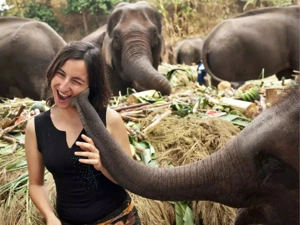
Tactile Signals: Touch plays a crucial role, especially in mother-calf interactions and social bonding. Elephants greet by trunk touching or rubbing, discipline younger herd members, or reassure each other during stressful times.
-
Visual Displays: Postures and ear-flapping act as visual messages to express dominance, submission, or alertness.
-
Chemical Signals: Elephants use secretions from temporal glands or urine to convey hormonal status or identification cues.
Together, these channels form a complex “language” crucial for herd cohesion and survival.
Gaj Dastak’s Acoustic and Behavioral Research Contributions
Gaj Dastak has integrated traditional conservation with cutting-edge acoustic research to study and interpret elephant vocalizations in their natural habitats. Key aspects include:
-
Behavioral Ethograms: By cataloging elephant sounds and associated behaviors, Gaj Dastak researchers gain insights into the nuances of elephant social interactions, stress responses, mating calls, and warning signals.
-
Real-time Monitoring: Using specialized microphones and recording equipment, Gaj Dastak monitors elephant communications to track herd movements and stress events, enabling proactive conflict prevention.
-
Understanding “Alarm Calls”: For instance, elephants produce specific rumble calls as alarm signals, which prompt other elephants to flee in unison—a crucial survival mechanism studied by Gaj Dastak.
This research allows conservationists to identify patterns that precede human-elephant conflicts, enhancing early warning systems.
Acoustic Deterrent Systems for Conflict Mitigation
Human-elephant conflict is severe in regions like Chhattisgarh, where expanding human settlements intersect with elephant habitats. This conflict causes crop damage, economic loss, and sometimes loss of life on both sides.
Gaj Dastak has implemented innovative acoustic deterrent systems to address this challenge:
-
Bee Sound Playback: Studies have shown elephants retreat from the sound of African honeybees, an evolutionary adaptation preventing stings. Gaj Dastak uses playback devices emitting bee sounds near vulnerable farmlands to deter elephants safely and humanely.
-
Alarm and Distress Signal Playback: By playing recordings of elephant alarm rumbles or distress calls, herds can be discouraged from entering human areas, leveraging their natural aversion to perceived danger.
-
Soundscape Modifications: Continuous adjustments to acoustic environments discourage elephants from habitual crop-raiding routes.
These systems demonstrate how understanding elephant communication can lead to practical solutions minimizing conflict without harm.
Behavioral Research Impact on Conservation
Gaj Dastak’s behavioral studies reveal social dynamics and learning capabilities in elephants:
-
Elephants exhibit vocal plasticity and can even mimic sounds, showing advanced cognitive abilities.
-
Communication reinforces social bonds, reconciles disputes, and coordinates group protection.
-
Understanding these dynamics aids in planning conservation strategies respecting elephant societies and needs.
-
This research helps tailor intervention methods that align closely with natural behaviors, enhancing success rates.
The blend of acoustic science and behavioral ecology in Gaj Dastak’s work is a model of modern wildlife conservation.
Broader Implications for Wildlife Conservation
The insights gained from studying elephant communication extend beyond just human-elephant conflicts:
-
Enhanced understanding promotes better habitat management and corridor design.
-
Acoustic monitoring helps detect poaching or distress signals in real time.
-
Educating local communities about elephant communication fosters empathy and cooperation.
-
Technologies developed can be adapted for other species facing conflict with humans.
Gaj Dastak’s contributions create a foundation for replicable, science-driven conservation interventions.
Conclusion
The hidden language of elephants is a rich, multi-sensory communication system that underpins their social complexity and survival. Through Gaj Dastak’s acoustic and behavioral research, we are uncovering the meanings behind elephant rumbles, calls, and gestures, translating this ancient language into tangible conservation actions.
The application of acoustic deterrent systems grounded in this knowledge represents a humane and effective way to reduce human-elephant conflicts, protect livelihoods, and conserve one of the Earth’s most iconic species. As research advances, such integrative approaches will be essential in fostering coexistence between humans and wildlife in shared landscapes.
