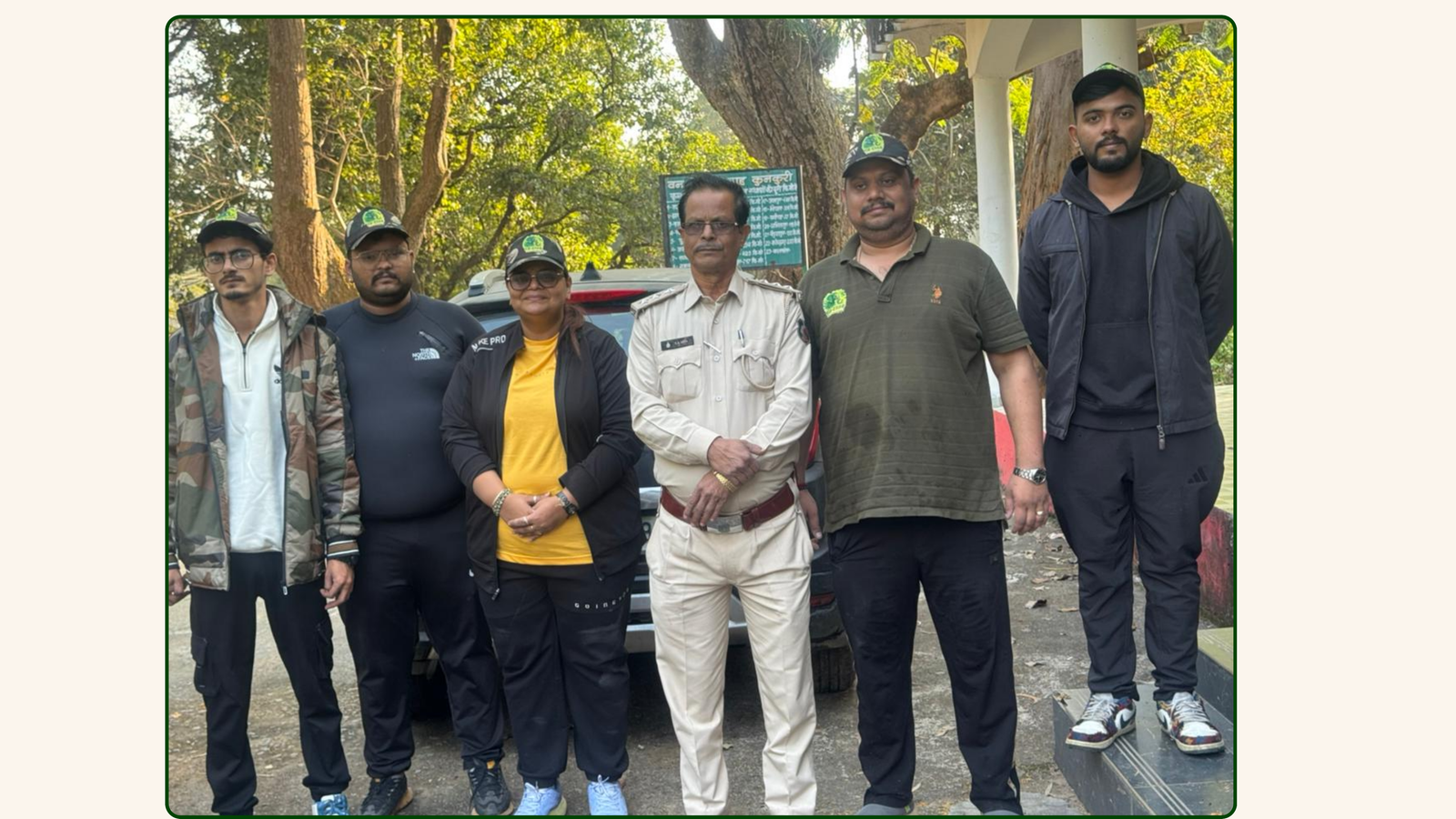
A live field demonstration of AI-powered thermal elephant detection at Bangursia Range, Raigarh Division. Senior forest officials witnessed real-time detection, acoustic deterrence activation, and documented critical adaptive elephant behavior that reshaped our deployment strategy.
The Raigarh demonstration was conducted under the guidance of senior Indian Forest Service officers, reinforcing GAJ-DASTAK's position as a government-validated human-elephant conflict mitigation technology.
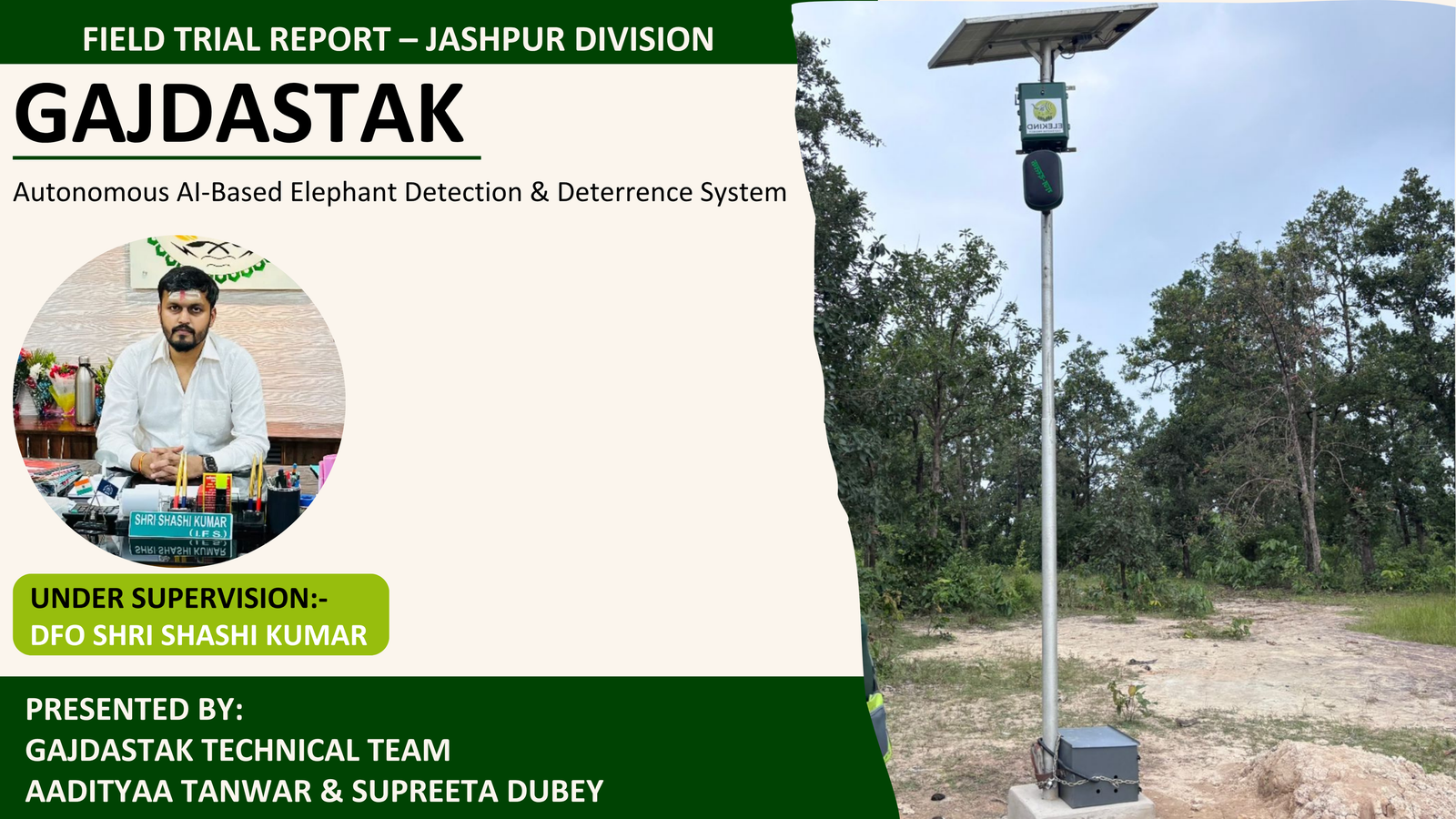
Following the extended deployment at Jashpur Division in 2025, the Chhattisgarh Forest Department requested a live demonstration at Bangursia Range in Raigarh Division — one of the state's highest-conflict corridors for human-elephant encounters.
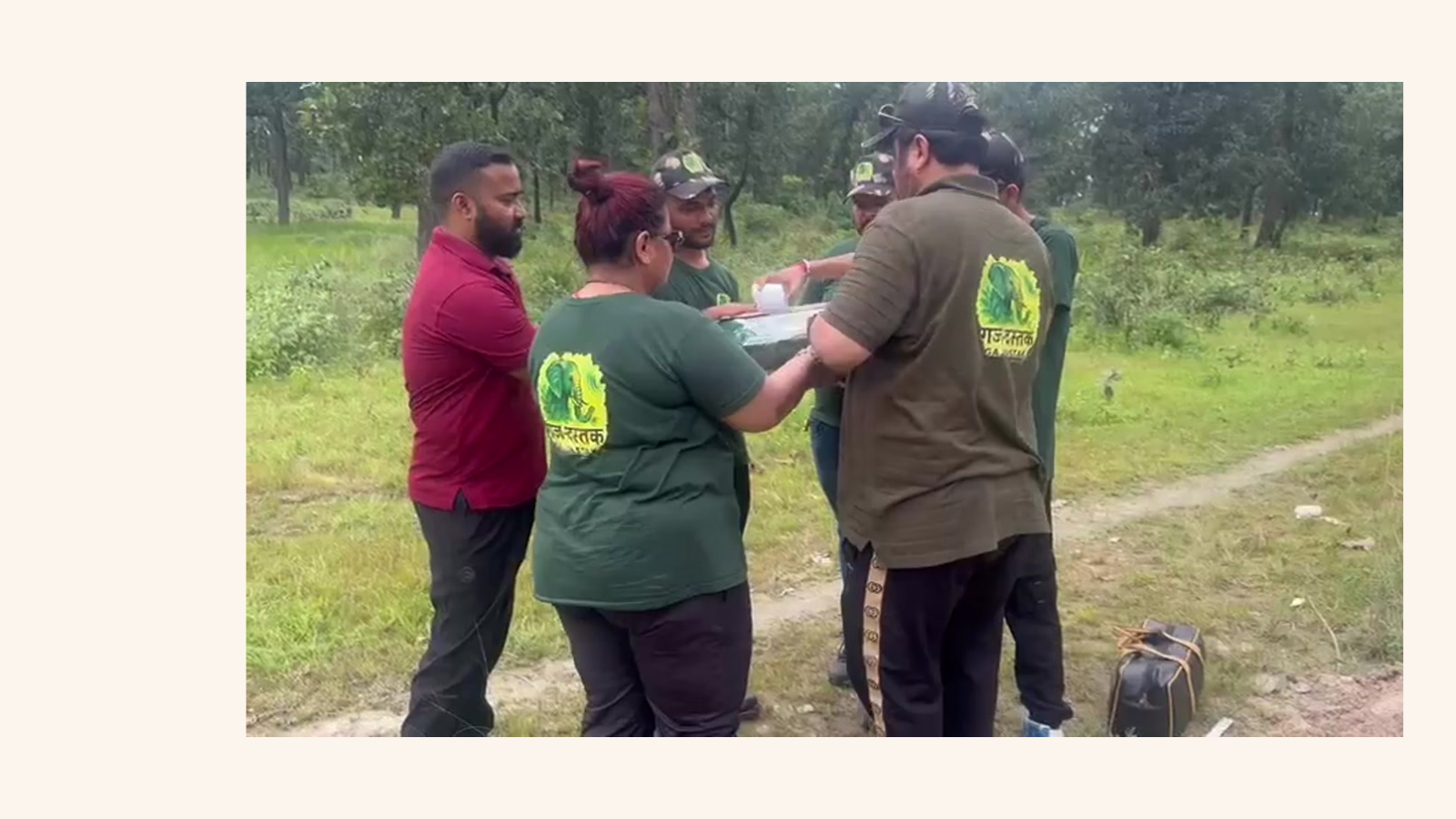
This demonstration was conducted under the guidance of PCCF V. Sreenivasa Rao (IFS) and senior CCF-level officers. Senior forest officials were present on-site to observe the system's real-time performance in active elephant territory.
Raigarh Division sits along one of Chhattisgarh's most active elephant movement corridors. The district has seen a sharp increase in human-elephant encounters in recent years, with crop destruction, property damage, and — most critically — loss of human life.
Traditional methods — torches, firecrackers, patrol teams on foot — remain reactive. By the time an elephant herd is spotted, the window for safe deterrence has already narrowed. Forest staff are exposed to danger, and communities living at the forest edge have no early warning.
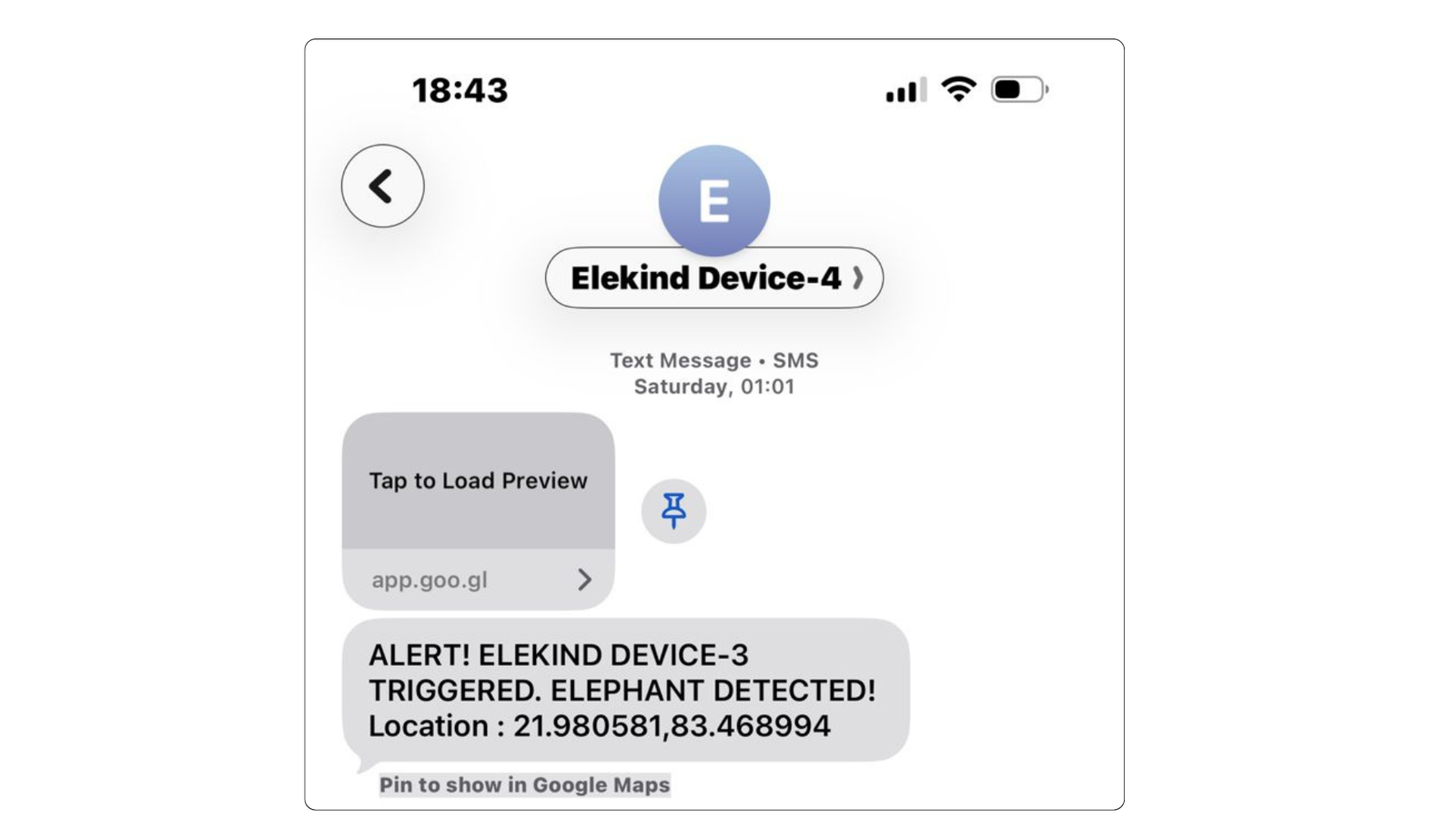
The department needed a technology-driven solution that could detect elephants before contact, operate autonomously at night, and provide actionable alerts to ground teams.
Elephant herds move primarily after dark, when human visibility is near zero and patrols are most vulnerable.
Thick vegetation obscures line of sight. Thermal imaging cuts through foliage where visible-light cameras fail.
Current alert systems depend on human spotting. By the time patrol teams respond, conflict has often already occurred.
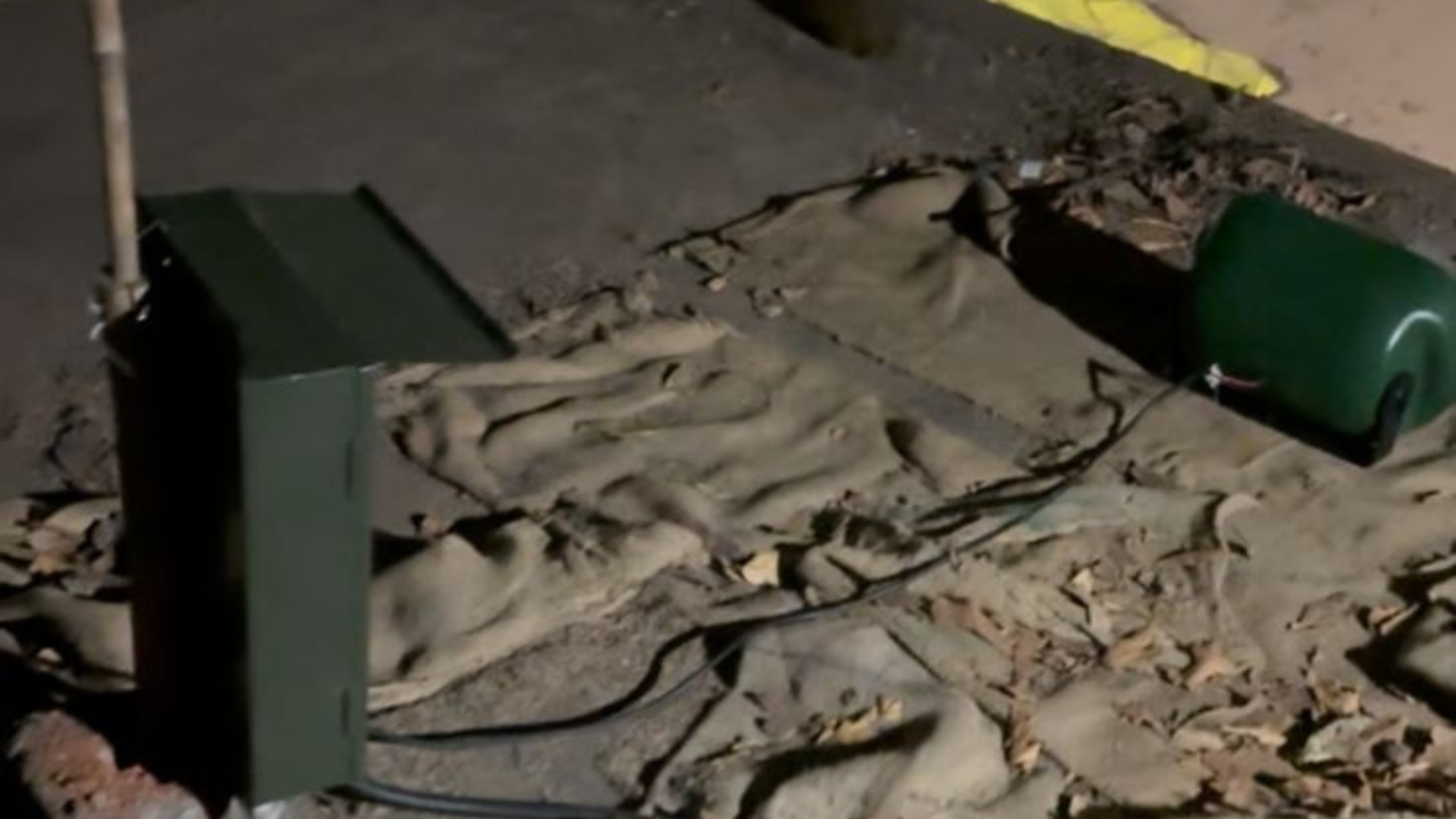
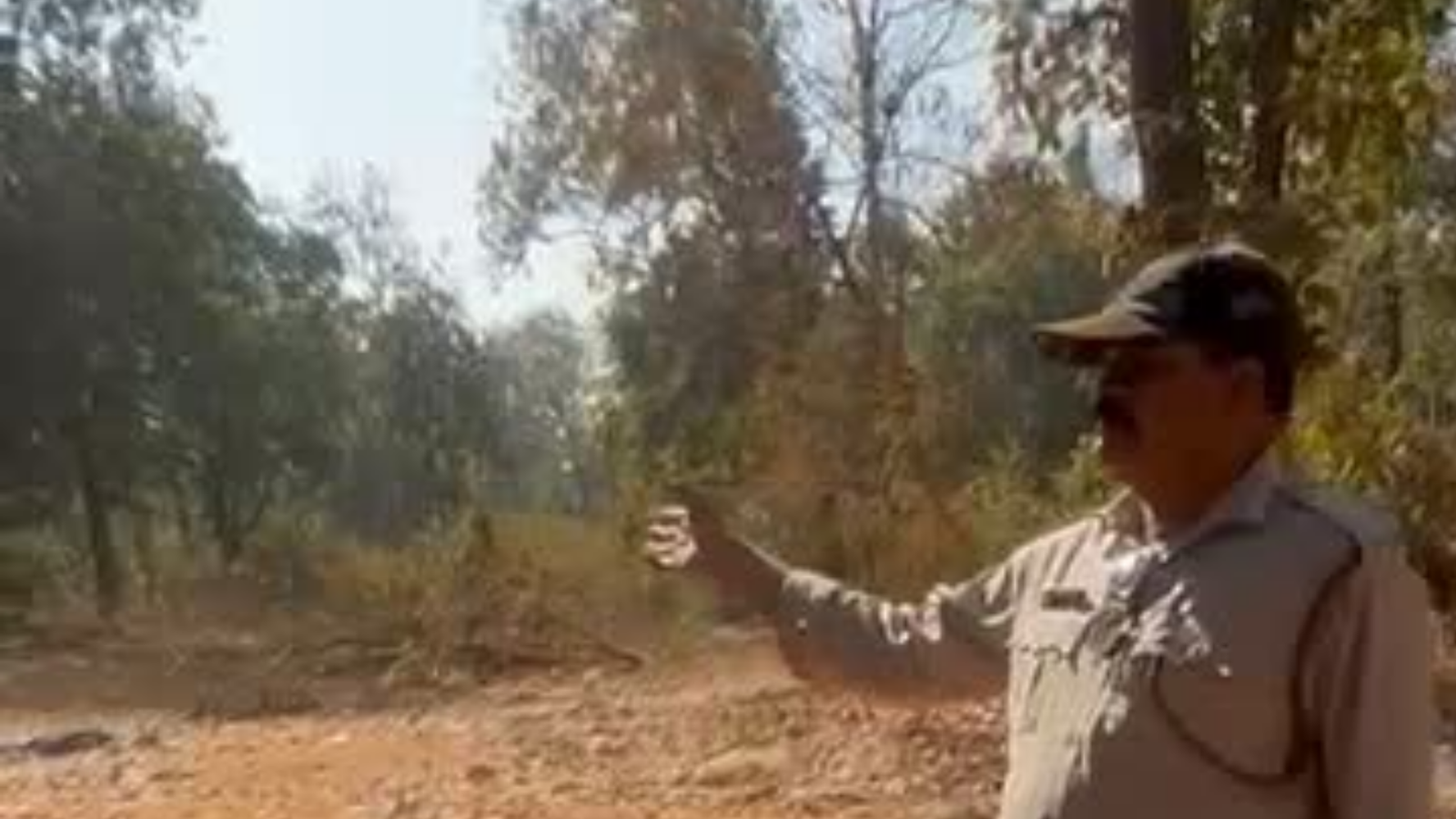
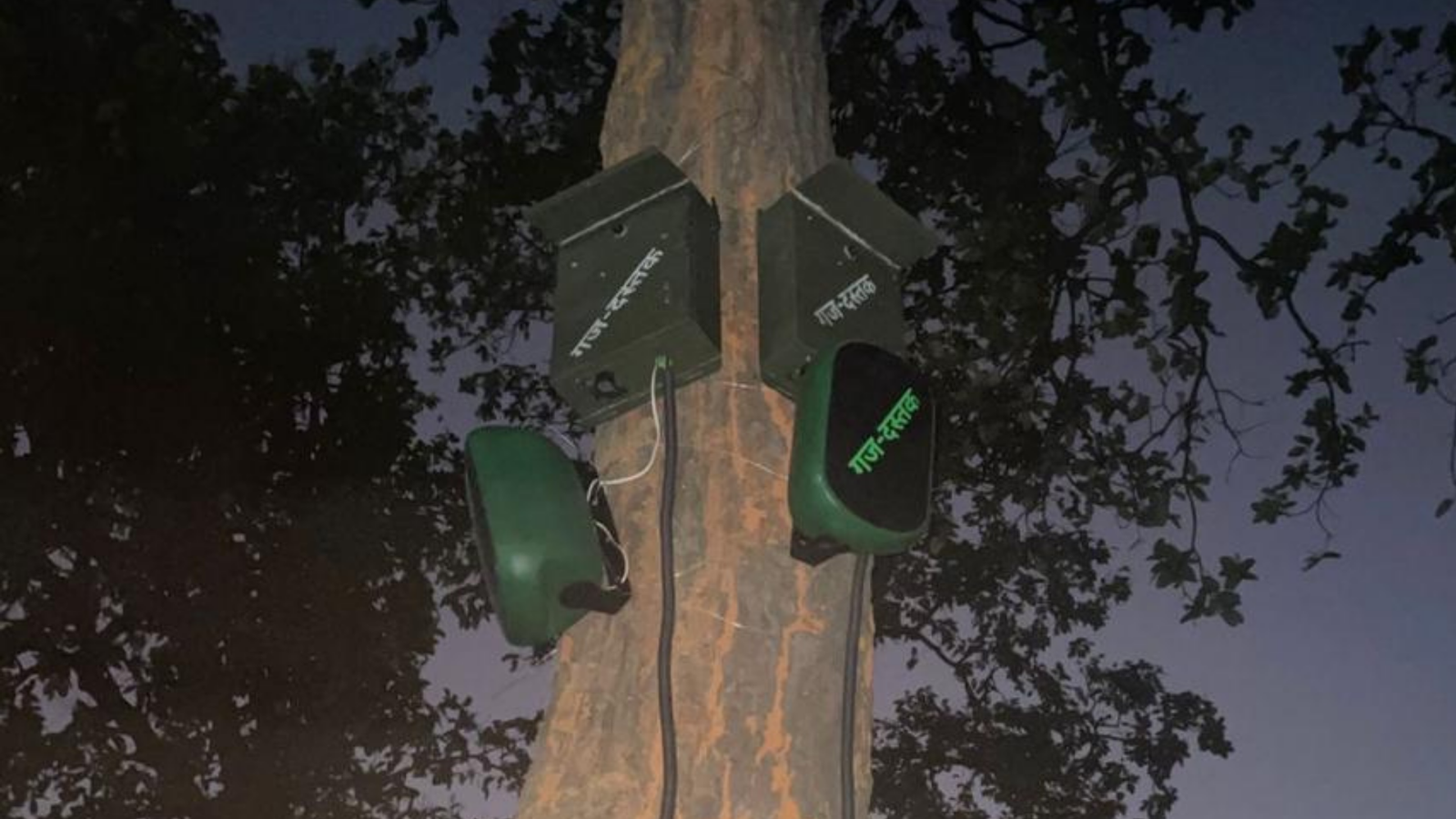
The GAJ-DASTAK unit was positioned at a strategic vantage point along a known elephant approach path at Bangursia Range. The system was fully armed and operational for the demonstration period.
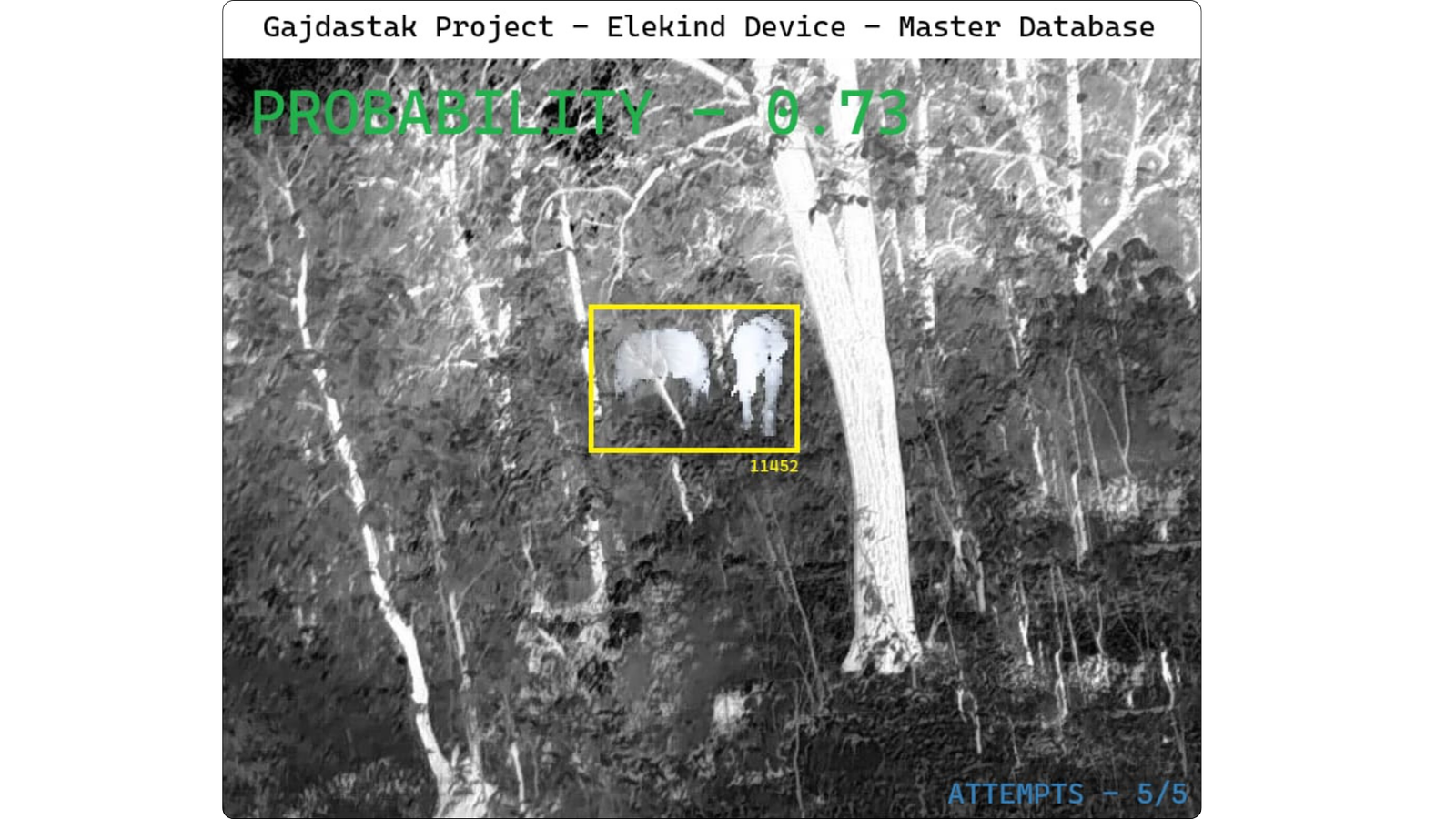
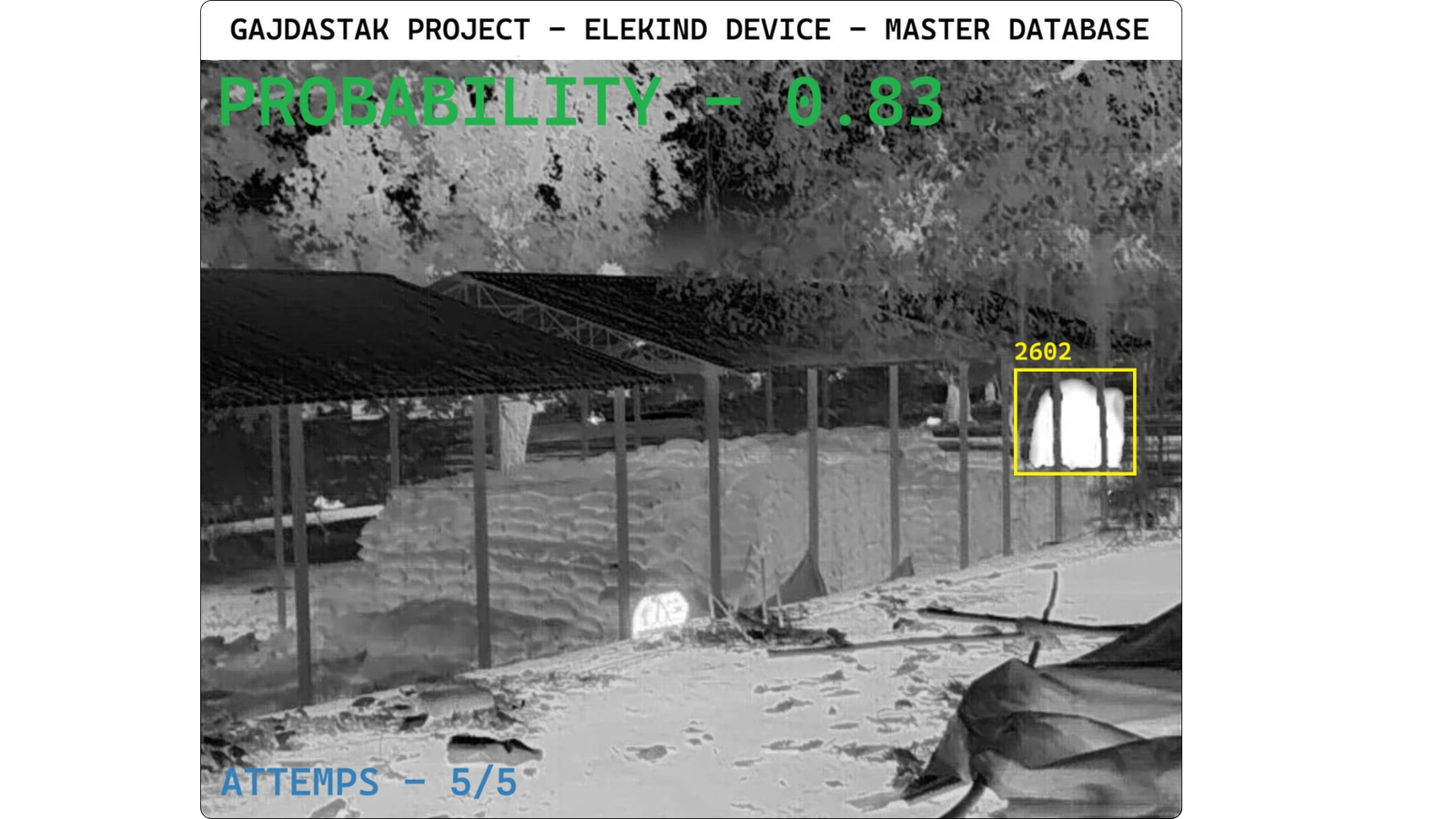
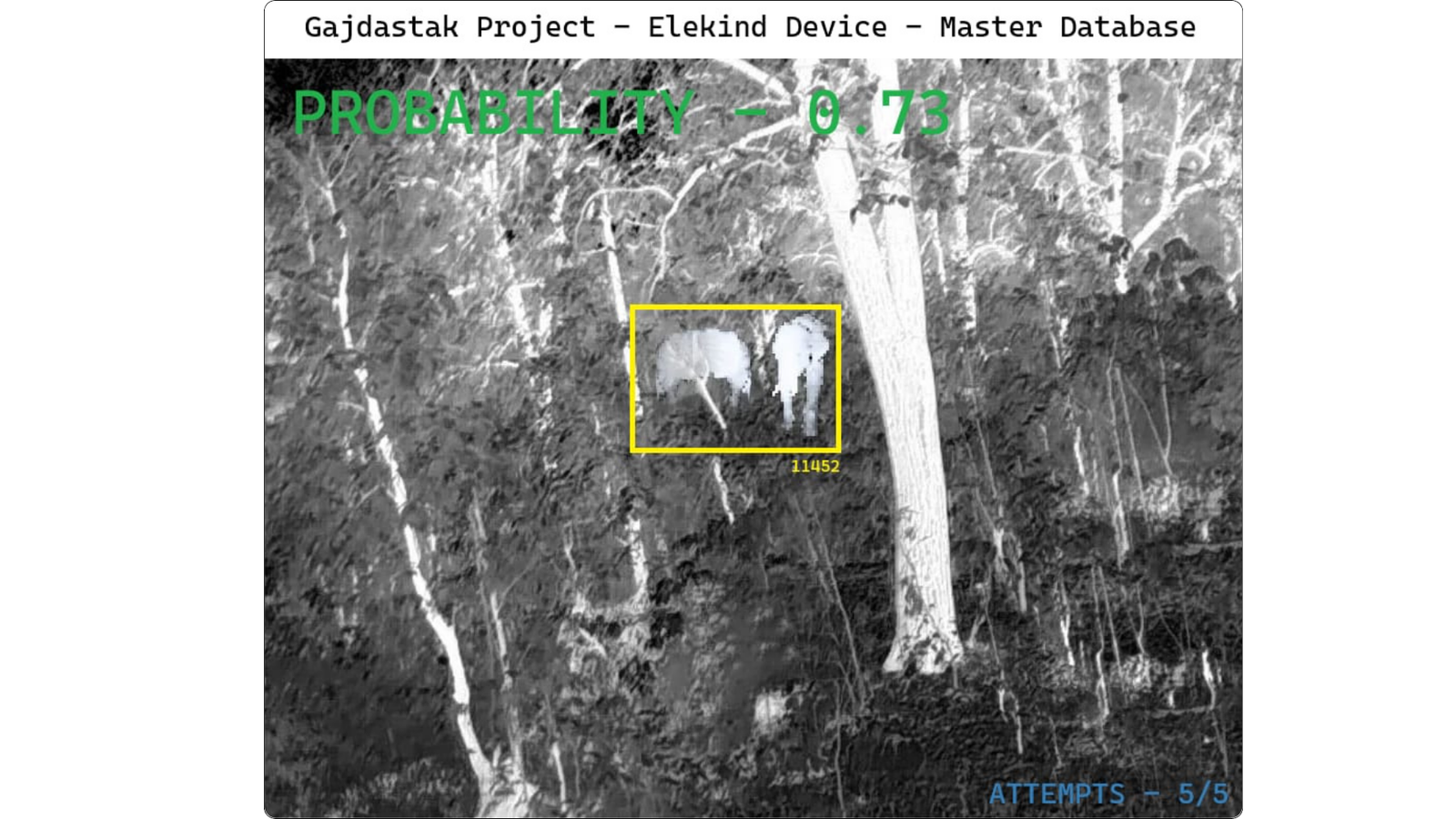
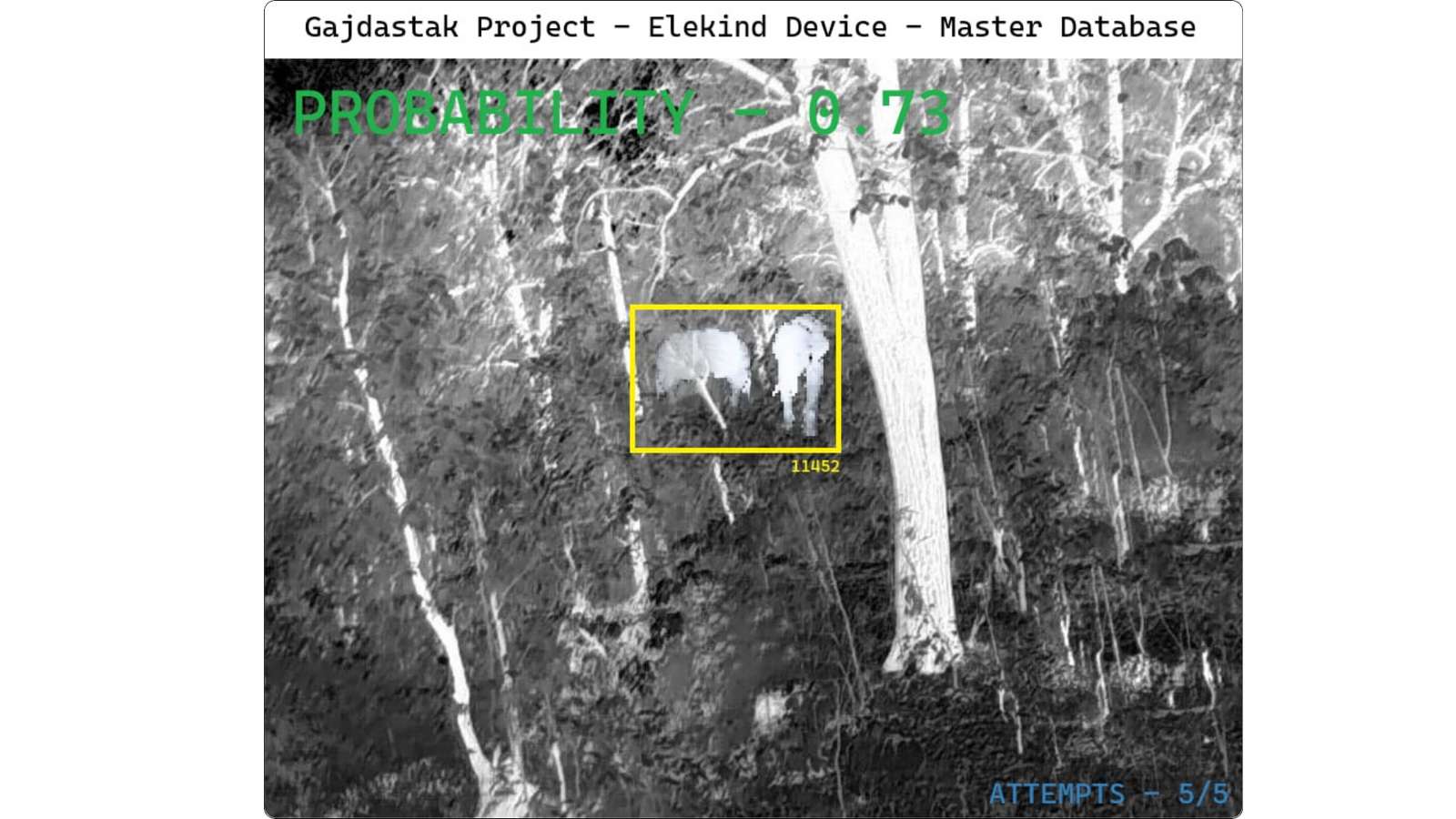
Real-time thermal detection at Bangursia Range. The AI system continuously analyzes high-resolution thermal frames, identifying elephant thermal signatures against the forest environment -- day or night, through dust, fog, and rain.
Thermal camera feed with real-time AI detection overlay
Heat signature differentiation -- wildlife vs. vegetation and terrain
After the acoustic deterrence activated, the elephant retreated from the coverage zone. Then, the critical observation: the elephant re-entered from an alternate direction, circumventing the single-point deterrence coverage. This was not random — it was a deliberate change of approach vector after encountering the deterrence stimulus.
Elephants adapt. Single-point deterrence is not enough.
A single unit cannot cover all approach paths to a protected area. The re-entry from an alternate direction confirmed that directional coverage gaps are a real operational limitation, not a theoretical concern.
Detection quality and deterrence effectiveness changed significantly based on the unit's position relative to the elephant's movement path. Optimal placement requires understanding of local terrain and established animal corridors.
Single-point deterrence is insufficient for intelligent wildlife.
The Raigarh demonstration proved what behavioral science predicted: elephants learn, adapt, and change approach vectors when they encounter a deterrence point. A single static unit creates a deterrence zone, not a deterrence perimeter. Elephants route around it.
Multiple coordinated units creating overlapping detection and deterrence zones are required to establish a true protective perimeter. This directly informed the Network Series product line.
The coverage gap problem is most immediately addressed by vehicle-mounted patrol units. A mobile unit on a patrol vehicle can provide 360-degree scanning coverage that moves with the threat.
Where static units have fixed fields of view, a patrol vehicle with thermal scanning can sweep approach corridors dynamically — covering the blind zones that elephants exploit.
Every field deployment generates behavioral data about how elephants interact with deterrence systems. This data feeds directly back into our AI models and deterrence algorithms, making the system progressively smarter.
GAJ-DASTAK is CAMPA-approved and field-validated. Contact us to discuss deployment for your forest division.