- What is Human-Elephant Conflict?
- The Scale of HEC in India
- Why Does Human-Elephant Conflict Occur?
- Traditional Methods — And Why They Fail
- The Role of Technology in HEC Mitigation
- GAJ-DASTAK: India's First AI Thermal Detection System
- Global Human-Elephant Conflict — Beyond India
- Field Evidence from Chhattisgarh
- What Forest Departments Can Do Today
- Frequently Asked Questions
What is Human-Elephant Conflict?
Human-elephant conflict (HEC) refers to any interaction between humans and wild elephants that results in negative consequences for one or both parties. This includes crop raiding, where elephants enter agricultural fields and destroy standing crops; property damage, where elephants demolish homes, granaries, and infrastructure; human casualties, where people are killed or seriously injured during encounters; and elephant deaths, from retaliatory killings, poisoning, electrocution from illegal fences, or train strikes.
The International Union for Conservation of Nature (IUCN) classifies the Asian elephant as Endangered, with an estimated 50,000–60,000 remaining globally. India is home to roughly 60% of this population — approximately 29,964 elephants according to the 2017 national census — distributed across fragmented habitats in 22 states. This makes India both the most important country for Asian elephant conservation and the country with the most severe human-elephant conflict.
The World Wildlife Fund (WWF) identifies HEC as one of the greatest threats to elephant survival worldwide. But what makes the Indian context uniquely challenging is the density of human settlement along forest edges. Unlike African savanna ecosystems where buffer zones exist, Indian forest-edge communities live within meters of elephant habitat. A field boundary is often all that separates a rice paddy from an elephant corridor.
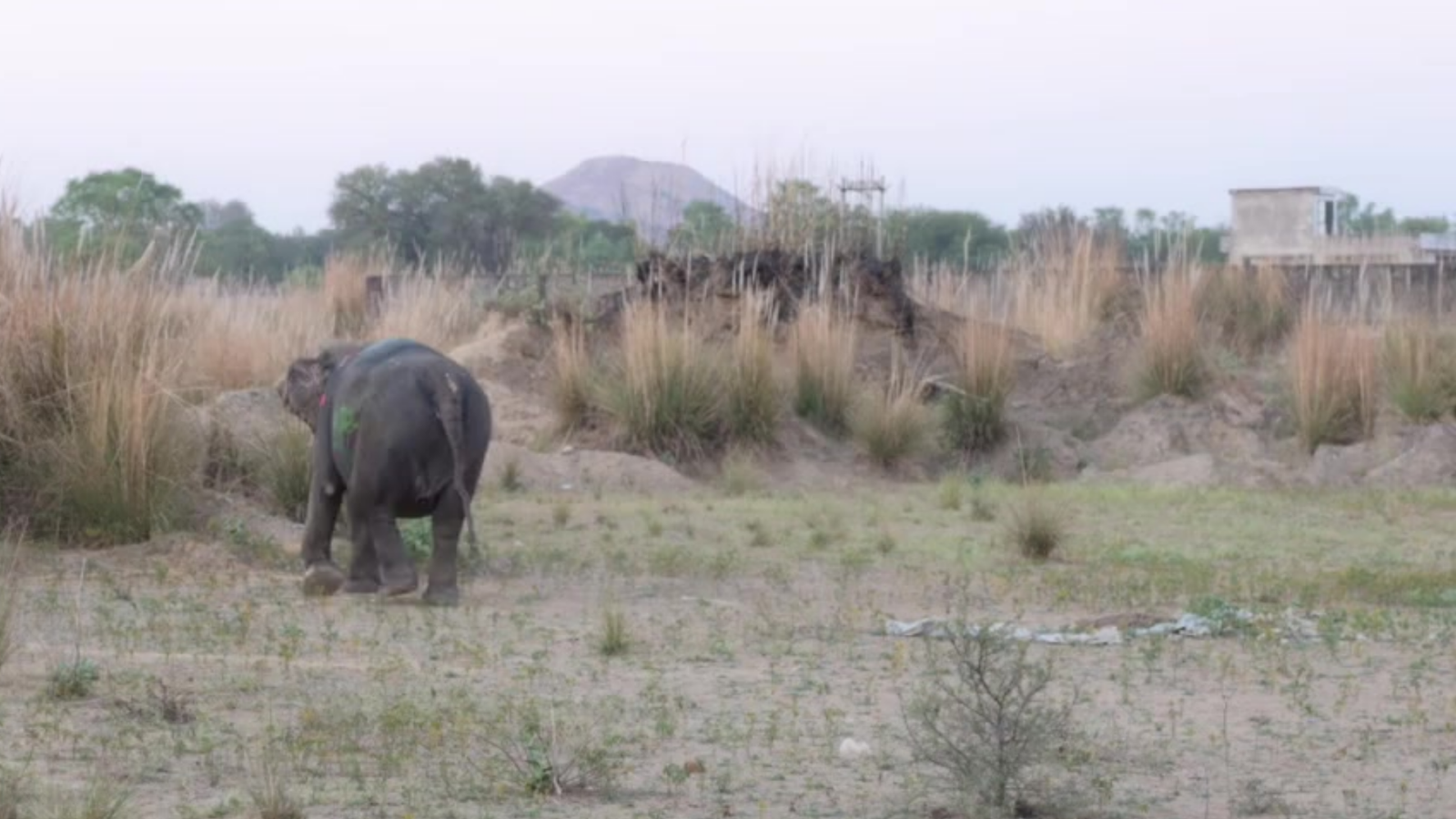
Human-elephant conflict is not new. What is new is its scale, frequency, and intensity. Over the past two decades, HEC incidents in India have escalated dramatically. Elephants are appearing in areas where they have never been seen before. Herds are traveling longer distances, staying longer in human-dominated landscapes, and becoming more habituated to traditional deterrents. The conflict is intensifying — and the existing response infrastructure is not keeping pace.
The Scale of Human-Elephant Conflict in India
The numbers are staggering. According to data from the Ministry of Environment, Forest and Climate Change (MoEFCC), India records over 500 human deaths annually from elephant encounters. This makes elephants the single most lethal large mammal in India — more than tigers, leopards, and bears combined. On the other side, over 100 elephants die every year from retaliatory killings, accidental electrocution, poisoning, and railway collisions.
Crop damage runs into hundreds of crores of rupees annually. A single elephant raid can destroy an entire season's harvest for a smallholder farmer. For families already at the margins of subsistence, this can be economically catastrophic. The psychological toll is equally severe — communities in high-conflict zones live in constant fear, with villagers taking turns to guard fields through the night, every night, for months during the crop season.
State-Wise HEC Impact in India
| State | Elephant Population (Est.) | Human Deaths/Year (Avg.) | Primary Conflict Zone | Severity |
|---|---|---|---|---|
| Chhattisgarh | 275+ | 70–100+ | Jashpur, Raigarh, Korba, Surguja | Critical |
| Odisha | 1,976 | 60–80 | Keonjhar, Dhenkanal, Mayurbhanj | Critical |
| Jharkhand | 700+ | 50–70 | Singhbhum, Hazaribagh, Palamu | Critical |
| West Bengal | 700+ | 50–70 | Bankura, Purulia, Jalpaiguri | Critical |
| Karnataka | 6,049 | 40–60 | Kodagu, Hassan, Mysuru | High |
| Kerala | 5,706 | 30–50 | Wayanad, Idukki, Palakkad | High |
| Assam | 5,719 | 50–70 | Goalpara, Sonitpur, Karbi Anglong | Critical |
| Tamil Nadu | 2,761 | 20–40 | Nilgiris, Coimbatore, Hosur | High |
Source: MoEFCC, Project Elephant Division, and state forest department reports. Numbers represent averages over the 2019–2025 period. Elephant population estimates from Elephant Census 2017 and subsequent state surveys.
Central Indian states — Chhattisgarh, Odisha, and Jharkhand — represent a particularly alarming trend. These states have relatively small elephant populations that have expanded rapidly from neighboring regions. The landscape was not historically managed for elephant presence, meaning there are no established corridors, no existing mitigation infrastructure, and limited institutional knowledge of elephant behavior among local forest staff. The result is disproportionately high casualty rates relative to elephant population size.
Why Does Human-Elephant Conflict Occur?
Understanding the root causes of HEC is essential for designing effective mitigation strategies. The conflict is not random — it follows predictable patterns driven by ecological, developmental, and behavioral factors.
1. Habitat Fragmentation and Loss
India has lost an estimated 25% of its elephant habitat in the past three decades. Forests have been carved up by roads, railways, mining operations, dams, and expanding agricultural frontiers. What was once contiguous forest is now a patchwork of isolated fragments. Elephants, which require large home ranges of 100–300 sq km, are forced to traverse human-dominated landscapes to move between forest patches for food, water, and mates.
2. Corridor Disruption
Elephant corridors — the traditional routes elephants use to move between habitats — are being blocked at an alarming rate. The Wildlife Institute of India (WII) has identified 101 elephant corridors across the country, many of which are severely compromised. When a corridor is blocked by a highway, settlement, or industrial installation, elephants do not simply stop moving. They find alternative routes — often through villages and agricultural fields.
3. Agricultural Expansion into Elephant Habitat
As human populations grow, agriculture pushes deeper into forest margins. Crops like paddy, sugarcane, maize, and banana are highly attractive to elephants — they represent concentrated, easily accessible nutrition compared to dispersed forest forage. A single hectare of paddy contains more calories than several hectares of natural forest. From the elephant's perspective, crop raiding is not aberrant behavior; it is optimal foraging strategy.
4. Climate Change and Shifting Ranges
Changing rainfall patterns affect forest productivity and water availability, forcing elephants to travel further and into new areas. Extended droughts reduce natural food availability, pushing herds toward irrigated agricultural areas. In central India, climate-driven shifts in vegetation patterns are contributing to the northward expansion of elephant ranges into Chhattisgarh and Jharkhand — states with limited HEC management infrastructure.
5. Human Settlement in Elephant Ranges
Encroachment into forest land, often driven by economic necessity or government resettlement programs, places human habitations directly in elephant movement paths. Forest-edge villages bear the brunt of conflict, with homes and fields situated within the daily activity range of resident elephant herds. The proximity is so extreme that in many Chhattisgarh villages, elephants walk through the village itself to access water or cross between forest patches.
"The elephant hasn't changed its route. We built a village on it." — Forest Range Officer, Jashpur Division, Chhattisgarh
Traditional Methods — And Why They Fail
Indian forest departments and communities have employed a range of traditional methods to mitigate HEC. While some offer partial, temporary relief, none have proven effective at scale. Understanding why these methods fail is critical for appreciating why a fundamentally different approach is needed.
Electric Fences
Electric fencing is the most widely deployed HEC mitigation measure in India, with thousands of kilometers installed across elephant range states. Yet field evidence consistently shows elephants defeating these fences. (For a detailed analysis, see our article on why solar electric fencing fails against elephants.) Adult elephants learn to break fence posts with their tusks, push trees onto electrified wires to ground the current, or simply walk through gaps created by poor maintenance. In remote forest areas, maintaining continuous power supply and repairing damaged sections is logistically impossible. Many fence installations become non-functional within months. Worse, improperly installed electric fences have killed elephants through lethal electrocution — contributing to elephant mortality rather than preventing conflict.
Firecrackers and Noise
Firecrackers, gunshots, and loud noise are the most common immediate-response method used by village communities during elephant intrusions. Initial effectiveness is high — elephants are startled and retreat. But elephants are highly intelligent animals with excellent long-term memory. Habituation occurs within days to weeks. Herds that have been exposed to firecrackers repeatedly learn that the noise poses no actual threat. Some elephants have been observed walking calmly through firecracker barrages that would have sent them fleeing months earlier. Our article on why electric fences and firecrackers fail examines the science of elephant intelligence behind these failures.
Trenches and Barriers
Trenches (typically 2–3 meters deep and wide) are dug along forest-agricultural boundaries to physically block elephant movement. In practice, elephants fill trenches with debris, find sections where erosion or flooding has reduced the depth, or simply walk around the endpoints. Trench maintenance in monsoon conditions — with heavy rainfall and soil erosion — requires constant investment that most forest divisions cannot sustain.
Human Patrol (Kunku / Night Watch)
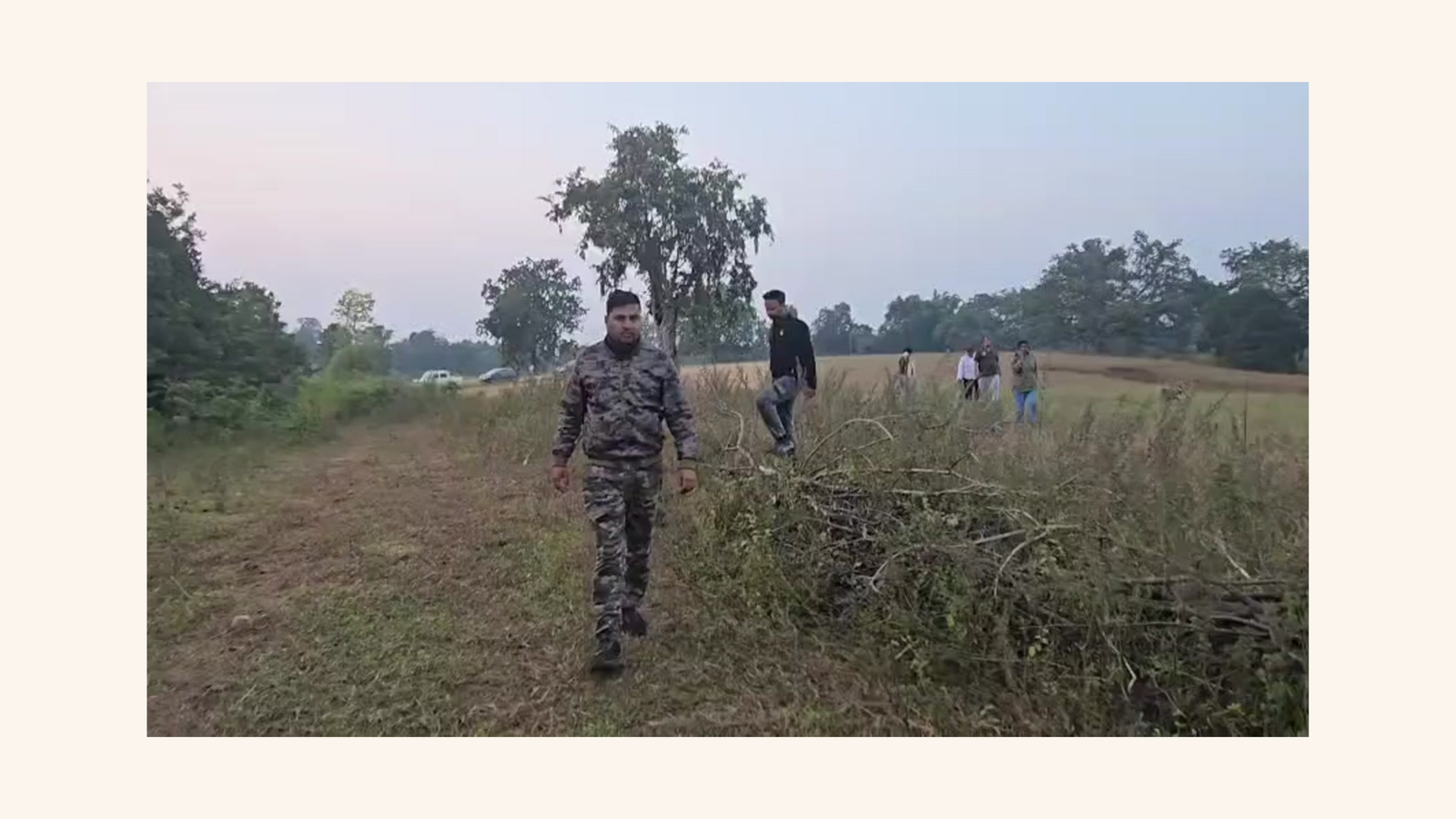
Night patrolling by forest department staff and village volunteers is common in high-conflict zones. Teams walk along forest edges and field boundaries, watching and listening for elephant movement. This approach suffers from critical limitations: human fatigue during months-long crop seasons, inability to see in darkness beyond flashlight range, danger to the patrol teams themselves, and the vast areas that need coverage relative to available personnel. A typical patrol team can effectively monitor only a few hundred meters of forest edge.
Chili Fences and Smoke
Chili-based deterrents — ropes strung with chili-soaked cloth, chili smoke generators, or capsaicin-laced paint — exploit elephants' sensitive trunks. Research in Africa and India has shown partial effectiveness, particularly for small crop plots. However, chili fences require frequent re-application (chili potency degrades rapidly), are ineffective in windy or rainy conditions, and provide no early warning — the elephant must already be at the boundary for the deterrent to activate.
Beehive Fences
Beehive fences leverage elephants' documented fear of African honeybees. When an elephant disturbs a beehive wire, the bees emerge and the herd retreats. Research by Save the Elephants has demonstrated effectiveness in Kenya. However, this approach has limited applicability in India: the Indian honeybee species is less aggressive than its African counterpart, maintaining bee colonies requires specialized knowledge, and the scale of protection per beehive fence is limited to small perimeters. Beehive fences are not a viable solution for protecting entire village boundaries or large agricultural zones.
The Role of Technology in HEC Mitigation
The fundamental problem with traditional methods is that they are reactive. By the time a firecracker is lit or a patrol team spots movement, the elephant is already in the conflict zone. Crop damage may have already begun. Human lives are already at risk. The paradigm shift required is from reaction after contact to detection before contact.
This is where technology enters the equation — not as a silver bullet, but as a force multiplier that addresses the specific weaknesses of traditional methods.
Early Warning Systems
The most impactful technological intervention in HEC is early warning. If forest staff and communities receive reliable alerts 10–30 minutes before elephants reach crop fields or villages, the response calculus changes entirely. Evacuation becomes possible. Controlled deterrence can be initiated at safe distances. Response teams can be mobilized before, not after, an incident.
AI and Thermal Detection
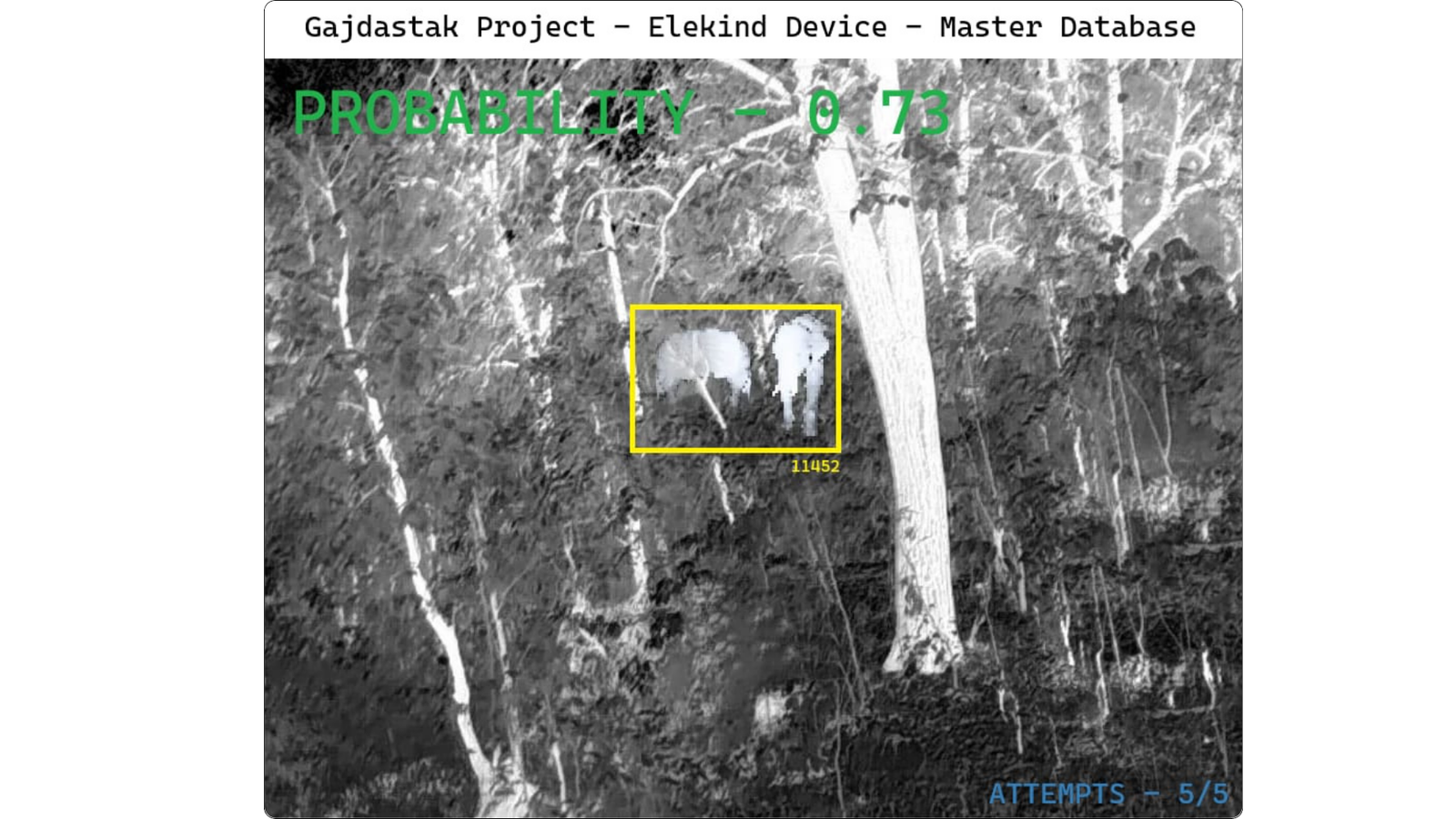
Thermal cameras detect infrared radiation emitted by warm bodies. Elephants, with their large body mass and high metabolic heat output, produce strong thermal signatures that are visible at distances of 50–500+ meters depending on camera specifications. Critically, thermal detection works in complete darkness, through fog, in rain, and through dust — conditions where visual cameras and human observers are blind. Learn more about how thermal imaging detects elephants through darkness and fog. AI models trained on thermal imagery can identify elephant-specific heat signatures in real-time, distinguishing them from cattle, vehicles, heated rocks, and other warm objects.
Acoustic Deterrence
Unlike firecrackers which elephants habituate to, calibrated acoustic deterrence uses sounds that trigger innate avoidance responses. Honeybee swarm recordings, specific low-frequency rumbles, and strategically varied sound patterns are harder for elephants to dismiss. When combined with early detection, acoustic deterrence can be activated before the elephant enters the conflict zone, redirecting movement rather than confronting an already-present animal.
IoT and Connected Networks
Networked sensor arrays along forest edges create continuous detection perimeters. When one unit detects movement, adjacent units and a central command dashboard can be alerted simultaneously. This enables corridor-level awareness rather than point-level detection, and allows coordinated response across multiple villages simultaneously.
Why Edge AI Matters
Most elephant habitat in India has no reliable internet connectivity. Cloud-based AI systems that require uploading images to remote servers for processing are fundamentally incompatible with deployment reality. Edge AI — running AI inference directly on the device, at the forest edge — eliminates internet dependency entirely. Detection happens on-device, alerts are sent via SMS (which works on 2G), and the system operates autonomously 24/7. This is not a convenience feature; it is a deployment necessity.
GAJ-DASTAK: India's First AI Thermal Detection System
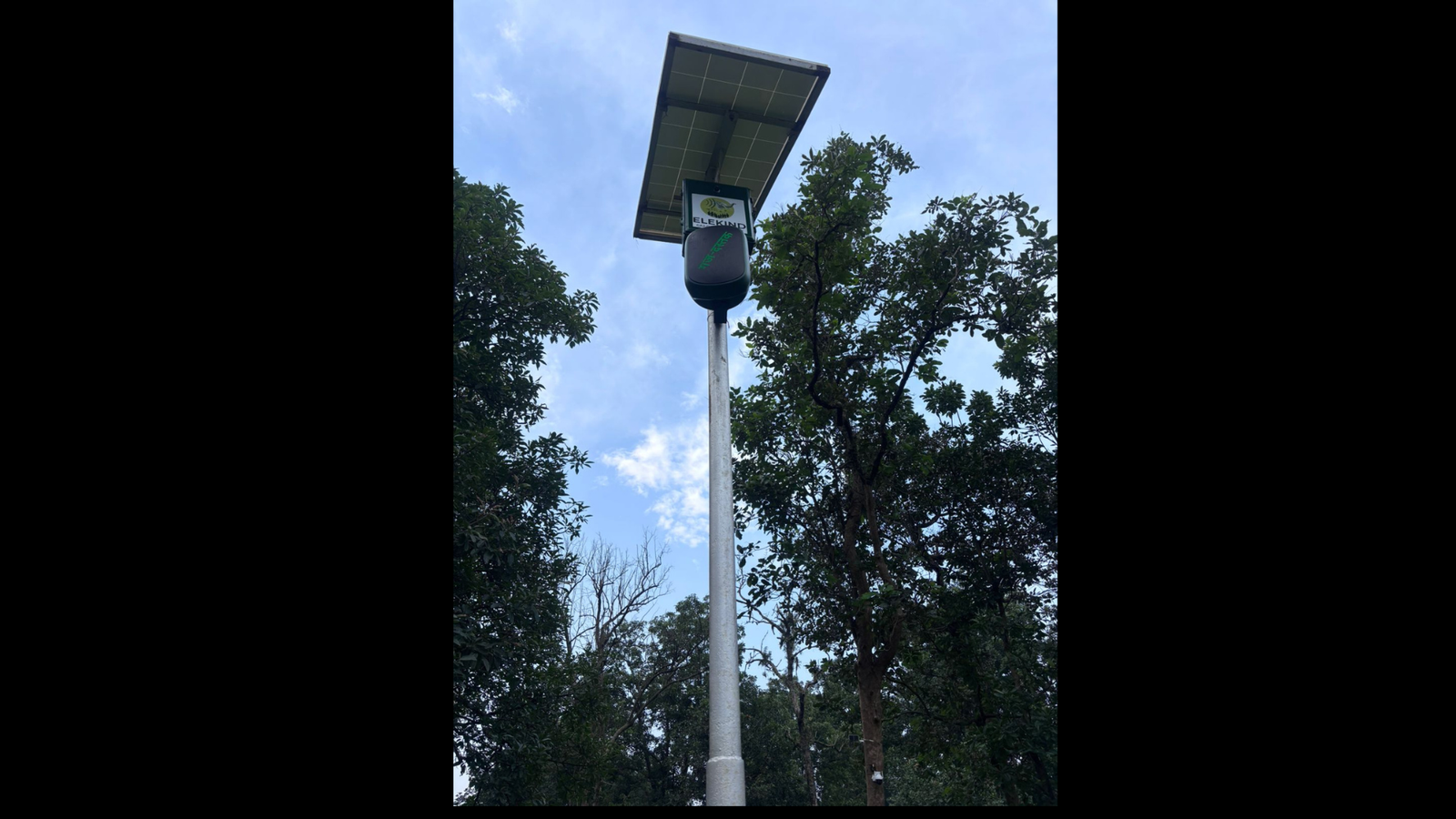
GAJ-DASTAK, developed by Infinity Capital Consultants Pvt. Ltd., is India's first AI-powered thermal elephant detection and acoustic deterrence system purpose-built for field deployment in Indian forest conditions. The system has been field-validated in Chhattisgarh across multiple forest divisions and has received CAMPA-approved funding from the state forest department.
The development and deployment of GAJ-DASTAK operates under the guidance of PCCF V. Sreenivasa Rao (IFS) and senior CCF-level officers of the Chhattisgarh Forest Department. The system's approach is aligned with research conducted by the Wildlife Institute of India (WII) and the objectives of MoEFCC's Project Elephant programme.
The 4-Stage Detection Pipeline
Key Technical Capabilities
- Detection in complete darkness: Thermal imaging requires no light source, operating in total darkness, fog, rain, and dust
- Real-time inference: AI processing runs entirely on-device with edge computing, delivering detection faster than human perception
- Zero internet dependency: All AI inference runs locally. Alerts transmitted via SMS on basic 2G cellular networks
- Solar powered: Autonomous operation with solar charging and battery backup, designed for remote off-grid deployment
- 24/7 autonomous operation: No human intervention required for continuous monitoring and detection
- CAMPA approved: Procurement precedent established through Chhattisgarh Forest Department funding under CAMPA scheme
- 100% Make in India: Designed, engineered, and manufactured entirely in India. No foreign cloud or processing dependencies
Global Human-Elephant Conflict — Beyond India
Human-elephant conflict is a global challenge affecting every country with wild elephant populations. While India bears the largest burden due to its Asian elephant population density, the crisis extends across Africa, South Asia, and Southeast Asia.
Africa: Kenya, Tanzania, and Botswana
Africa is home to approximately 415,000 savanna elephants and an estimated 100,000 forest elephants. HEC is severe across East and Southern Africa. Kenya reports significant crop raids and human casualties in areas surrounding national parks and reserves. Tanzania faces intense conflict in farming communities adjacent to elephant corridors. Botswana, with the world's largest elephant population (~130,000), manages escalating conflict as elephants expand into agricultural areas. Conservation organizations including Save the Elephants are pioneering research into technological deterrence methods.
Sri Lanka
Sri Lanka has one of the highest per-capita HEC rates globally, with 100+ human deaths annually from elephant encounters and over 400 elephant deaths per year — the highest elephant mortality rate in Asia. The island's dense human population and fragmented forest patches create intense conflict zones, particularly in the dry zone. Electric fencing is the primary mitigation method, with the same limitations observed in India.
Southeast Asia: Malaysia and Indonesia
Palm oil plantation expansion in Malaysia and Indonesia has destroyed vast tracts of elephant habitat, creating severe HEC. Bornean pygmy elephants in Sabah, Malaysia face critical habitat loss. Sumatran elephants in Indonesia are classified as Critically Endangered, with plantation conflicts a primary threat. Forest departments in both countries face the same challenge: detecting elephant incursions in large plantation perimeters with limited personnel.
China: Yunnan Province
China's only wild elephant population in Yunnan Province gained global attention in 2021 when a herd migrated over 500 km northward through farms and villages. The incident highlighted the scale of habitat pressure even in countries with strong conservation policy. China has since invested heavily in monitoring technology, including drone-based tracking and infrared camera networks.
The common thread across all these regions is clear: traditional barrier-based approaches are failing, and the transition to technology-assisted early warning and detection is becoming a global imperative. Forest departments worldwide are actively seeking solutions that work in their specific terrain, climate, and infrastructure constraints. Edge AI thermal detection — independent of internet, operational in all conditions, and scalable — represents a universal approach adaptable to diverse deployment environments.
Field Evidence from Chhattisgarh
GAJ-DASTAK is not a theoretical concept or a laboratory prototype. It has been deployed, tested, and validated in active elephant conflict zones in Chhattisgarh, one of India's most severely affected states.
Jashpur Division — November 2025
The Jashpur deployment was the first extended field trial under DFO Shashi Kumar (IFS). The system was installed at a known elephant corridor crossing point near a forest-edge agricultural boundary. Over a multi-week deployment period, the system operated autonomously 24/7 on solar power, demonstrating thermal detection capability in real forest-edge conditions including heavy fog, variable ambient temperatures, and dense vegetation backgrounds. The deployment also revealed a critical vulnerability: human tampering with external cables. This incident led to a fundamental redesign of the system's cable routing architecture — all wiring is now routed internally within the sealed enclosure.
Raigarh Division (Bangursia) — March 2026
The Bangursia site deployment in Raigarh Division, under DFO Arvind P.M. (IFS), represented the government validation milestone. The deployment achieved zero crop loss during the deployment period in the protected area. The system demonstrated real-time detection and alerting under operational conditions. The Chhattisgarh Forest Department subsequently issued government validation documentation and CAMPA-approved funding for system procurement.
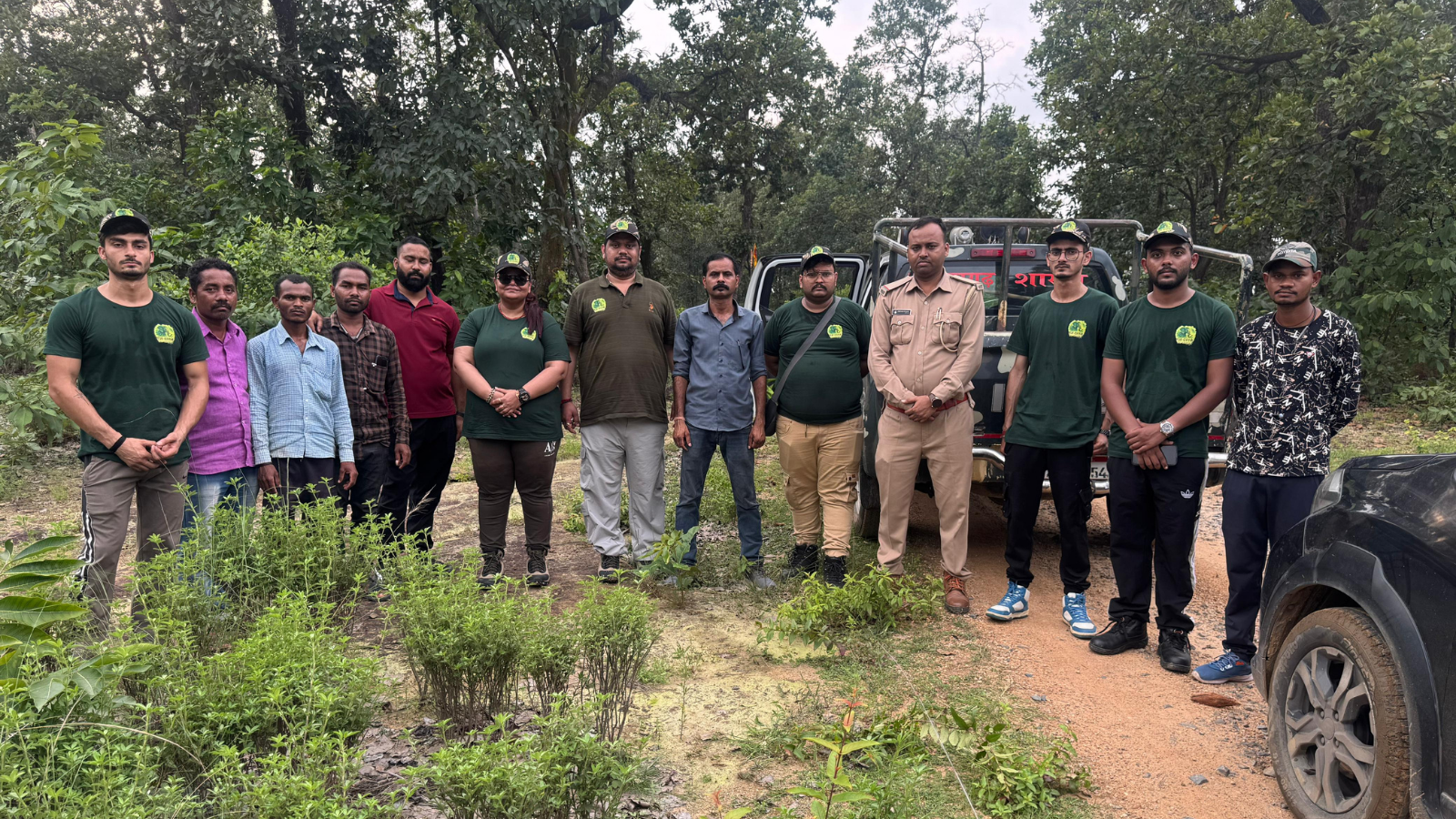
The field evidence from Chhattisgarh demonstrates three critical points: the technology works in real forest conditions; it can operate autonomously without human intervention; and Indian government procurement channels (CAMPA) can fund it. These precedents open the door for any state forest department in India to deploy the same system.
What Forest Departments Can Do Today
Forest departments across India now have a clear path to deploying AI-powered elephant detection systems. The procurement precedent has been established, the funding mechanism exists, and the technology has been field-validated.
Step 1: Identify Deployment Sites
Focus on locations with documented, recurring elephant conflict: forest-edge villages with crop raiding history, known corridor crossing points, and areas with recent human casualties. These sites provide the highest impact per deployment and the clearest justification for procurement.
Step 2: Access CAMPA Funding
The Compensatory Afforestation Fund Management and Planning Authority (CAMPA) was established under the Compensatory Afforestation Fund Act, 2016. CAMPA funds can be utilized for human-wildlife conflict mitigation, including AI-based detection systems. The Chhattisgarh procurement demonstrates the precedent. Forest departments can initiate procurement through their Annual Plan of Operations (APO) submissions to the respective State CAMPA.
Step 3: Request a Field Demonstration
GAJ-DASTAK offers on-site field demonstrations at no commitment. We bring the system to your division, install it at an identified conflict site, and demonstrate real-time detection capability under actual field conditions. This allows DFOs and senior officers to evaluate system performance before committing to procurement.
Step 4: Contact Us
For technical specifications, CAMPA-compliant procurement documentation, or to schedule a field demonstration, contact the GAJ-DASTAK team:
- Email: gajdastak@gmail.com
- Website: gajdastak.com/contact
- Company: Infinity Capital Consultants Pvt. Ltd., Delhi, India
We also welcome partnerships with conservation organizations, wildlife research institutions, international forest departments, and government agencies working on HEC mitigation globally.


Frequently Asked Questions
India records over 500 human deaths annually from elephant encounters, according to MoEFCC data. This makes elephants the deadliest large mammal in India. Additionally, over 100 elephants die each year from retaliatory killings, electrocution from illegal fences, poisoning, and railway collisions. The human death toll has been increasing over the past decade as habitat fragmentation intensifies and elephant ranges expand into previously unaffected areas.
The most severely affected states include Chhattisgarh, Odisha, Jharkhand, West Bengal, Assam, Karnataka, Kerala, and Tamil Nadu. Chhattisgarh alone reports 70–100+ human deaths per year despite having a relatively small elephant population of approximately 275 individuals. Central Indian states (Chhattisgarh, Jharkhand, Odisha) have seen the most dramatic escalation as elephant herds expand into new territories where no mitigation infrastructure exists.
Electric fences fail for multiple reasons. Elephants learn to break fence posts with their tusks or push trees onto electrified wires to ground the current. Fence maintenance in remote forest areas is logistically impossible at scale. Power supply in rural India is unreliable. Elephants quickly discover gaps or weak points from monsoon damage and erosion. Many fence installations become non-functional within months. Additionally, improperly installed electric fences have actually killed elephants through lethal electrocution, contributing to elephant mortality rather than preventing conflict.
Yes. AI systems using thermal (LWIR) cameras detect elephants by their body heat signature. Thermal imaging works in complete darkness, through fog, in rain, and through dust — conditions where visual cameras and human observers cannot operate. GAJ-DASTAK uses a high-resolution thermal camera with AI inference running entirely on-device, requiring no internet. Detection occurs in real-time, providing early warning before elephants reach villages or crop fields.
CAMPA (Compensatory Afforestation Fund Management and Planning Authority) was established under the Compensatory Afforestation Fund Act, 2016 to manage funds collected from projects that divert forest land. These funds can finance forest conservation, wildlife protection, and human-wildlife conflict mitigation. Yes, CAMPA can fund AI-based elephant detection systems. GAJ-DASTAK has received CAMPA-approved funding from the Chhattisgarh Forest Department, establishing the procurement precedent for other state forest departments to follow.
Thermal imaging cameras detect long-wave infrared (LWIR) radiation emitted by warm objects. All objects with a temperature above absolute zero emit infrared radiation, with warmer objects emitting more. Elephants, with their large body mass and high metabolic heat output, produce strong thermal signatures that contrast against cooler vegetation and terrain. A trained AI model analyzes these thermal frames in real-time, identifying elephant-specific heat patterns and body shapes while distinguishing them from other warm objects like cattle, vehicles, or heated rocks.
No. Acoustic deterrence uses natural sounds that elephants instinctively avoid, such as honeybee swarm recordings and specific frequency patterns. These sounds trigger a natural flight response without causing physical harm, stress injuries, or hearing damage. Unlike firecrackers or gunshots which cause panic and can lead to stampede injuries to both elephants and humans, calibrated acoustic deterrence gently redirects elephant movement. The approach is supported by research from the Wildlife Institute of India (WII) and international conservation organizations.
Forest departments can procure AI detection systems through CAMPA funds, state wildlife management budgets, or central Project Elephant scheme allocations under MoEFCC. The procurement follows standard government procedures: technical specification submission, field demonstration and evaluation, fund allocation, and work order issuance. GAJ-DASTAK provides complete procurement support including technical specifications, CAMPA-compliant documentation, and on-site demonstrations at no commitment. Contact gajdastak@gmail.com to initiate the process.
Further Reading
- How GAJ-DASTAK's AI Technology Works
- GAJ-DASTAK Product Range — Static, Mobile, Tower & Network
- Detailed Field Deployment Reports
- About Infinity Capital Consultants Pvt. Ltd.
- Latest News & Updates
- Ministry of Environment, Forest and Climate Change (MoEFCC)
- Wildlife Institute of India (WII), Dehradun
- IUCN — International Union for Conservation of Nature
- World Wildlife Fund (WWF)
- Save the Elephants